Advertisements
Advertisements
प्रश्न
Humans are ______.
पर्याय
oviparous
viviparous
ovoviviparous
Advertisements
उत्तर
Humans are viviparous.
Explanation:
Sexually reproducing organisms like humans that give birth to young ones directly. In this case, the development of the zygote occurs within the body of the organism. Such organisms are called viviparous.
संबंधित प्रश्न
Identify True/False statement. Correct false statement to make it true.
Androgens are produced by Sertoli cells.
Identify True/False statement. Correct false statement to make it true.
Spermatozoa get nutrition from Sertoli cells.
Draw a label diagram.
Draw a labeled diagram to show the interrelationship of four accessory ducts in a human male reproductive system.
Explain the term Gametogenesis.
Name the Following
The tubular knot fitting like a cap on the upper surface of the testes.
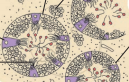
The given diagram represents T. S of
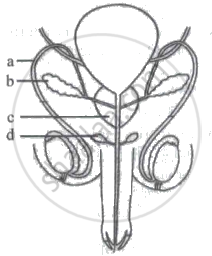
Identify the labels (a, b, c, and d) in the given diagram of the male reproductive system.
The vas deferens opens into urethra as ______.
Each testis is connected to the wall of scrotum by short. fibromuscular band called ______.
Which of the following hormone maintains the function of male sex accessory gland and ducts?
Seminal vesicles are located in ______.
Mark the odd one.
During adolescence, several changes occur in the human body. Mark one change associated with sexual maturation in boys
Sketch and label Human Male Reproductive System.
Draw a neat labeled diagram of T.S. of testis.
Answer the following question based on the human male reproductive system:
In which organ sperms are formed?
Given below is a group of terms. In the group, one pair indicates the relationship between the two terms. Rewrite and complete the second pair on a similar basis.
Sperm : Spermatogenesis :: Ovum : ______.
The figure given ahead is an organ system of humans. Study the same and answer the following questions.
 |
- Identify the organ system.
- Label the guidelines 1 to 7.
- Write one important role of parts 3 and 6.
- Name the cells of part 1 that produce testosterone.
- What is the significance of the part 1 being located in a separate sac suspended outside the body?
Which cells are also called 'Nurse Cells' and provide nutrition and structural support to developing sperm?
The vas deferens is described as which type of duct?
