Advertisements
Advertisements
प्रश्न
Give the general characteristics of organic compounds.
Advertisements
उत्तर
All organic compounds have the following characteristic properties.
- They are covalent compounds of carbon and generally insoluble in water and readily soluble in organic solvent such as benzene, toluene, ether, chloroform etc…
- Many of the organic compounds are inflammable (except CCl4). They possess low boiling and melting points due to their covalent nature.
- Organic compounds are characterized by functional groups. A functional group is an atom or a specific combination of bonded atoms that react in a characteristic way, irrespective of the organic molecule in which it is present. In almost all cases, the reaction of an organic compound takes place at the functional group. They exhibit isomerism which is a unique phenomenon.
APPEARS IN
संबंधित प्रश्न
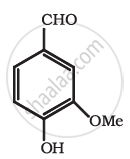
Identify the functional group in the following compound.
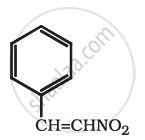
Identify the functional group in the following compound.
What is meant by homologous series?
Write a note on homologous series.
What is the percentage of carbon in urea?
(Atomic mass C = 12, H = 1, N = 14, O = 16)
Which of the following statements is INCORRECT for the organic compounds which belong to homologous series?
What is the molecular formula of pyran?
The correct decreasing order of priority for the functional groups of organic compounds in the IUPAC system of nomenclature is ______.
Identify the α - carbons in the following species and give the total number of
\[\ce{CH3 -CH2 -\overset{⊕}{C}H -CH2 -CH3}\]
Identify primary, secondary, tertiary and quaternary carbon in the following compound.
\[\begin{array}{cc}
\ce{CH3}\phantom{..................}\\
|\phantom{....................}\\
\ce{CH3 - C - CH - CH2 - CH2 - CH3}\\
|\phantom{....}|\phantom{................}\\
\ce{CH3}\phantom{.}\ce{CH3}\phantom{..............}
\end{array}\]
