Advertisements
Advertisements
प्रश्न
Explain the heating effect of electric current.
Advertisements
उत्तर
- When an electric current passes through a wire, the electrical energy is converted to heat.
- In heating appliances, the heating element is made up of materials with high melting point. An example of such a material is nichrome (an alloy of nickel, iron and chromium).
- The heating effect of electric current has many practical applications.
- The electric bulb, geyser, iron box, immersible water heater are based on this effect.
- These appliances have heating coils of high resistance.
- Generation of heat due to electric current is known as the heating effect of electricity.
APPEARS IN
संबंधित प्रश्न
Which of the following characteristic is not suitable for a fuse wire?
(a) thin and short
(b) thick and short
(c) low melting point
(d) higher resistance than rest of wiring
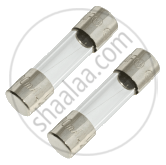
Identify the figure and give its use.
Answer the following question:
what is the heating effect of the electric current? state any four applications of it?
What is the heating effect of electric current?
Right or wrong sentence.
Live wire and neutral wires have a 220 V potential difference.
Explain the application of heating effect of electric current in an electric bulb with a diagram.
Why is parallel arrangement used in domestic wiring?
Explain the working of an electric fuse.
An electrochemical cell converts ______ energy into ______ energy.
The graph of voltage vs current for four different materials is shown below.

Which of these four materials would be used for making filament of bulb?
