Advertisements
Advertisements
प्रश्न
Define monopoly.
Define monopoly market.
Advertisements
उत्तर
A monopoly is a market situation in which a single firm sells a commodity, and there is no close substitute for the commodity the monopolist sells.
APPEARS IN
संबंधित प्रश्न
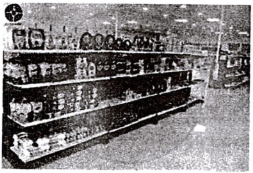
The image above shows a departmental store of a market structure.
- Identify the form of market as observed from the above image.
- Discuss the features of this market form with respect to:
- Type of product
- Entry and exit of firms
- Selling cost
How is Perfect competitive market is different from a monopoly market?
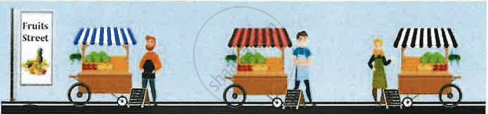
“While shopping for fruits in the local market you see many seller selling fruits”. In this context answer the following:
- What is the type of market referred to?
- State and draw the type of demand curve faced by the market above.
- Differentiate between the market indicated above and monopoly on the basis of:
- No. of sellers
- Market price
- Entry and exit of firms in the market
'Homogeneous products' is a characteristic of ______.
A seller cannot influence the market price under:
There is no difference between perfect competition and pure competition.
Which among the following is a feature of monopsony market?
Imperfect knowledge is a characteristic feature of:
Which of the following market types has the fewest number of firms?
Identify the market form for seller A on the basis of the following information:
| Units of output sold | Price offered by seller A in ₹ |
| 30 | 10 |
| 40 | 10 |
| 50 | 10 |
Products sold by each firm in a perfectly competitive market are perfect substitutes of each other.
Read the following statements carefully and choose the correct alternative:
Assertion (A): Price discrimination is possible under monopoly.
Reason (R): A monopolist can charge different prices in different markets because different sets of consumers - rich and poor - have different price elasticity of demand for the monopolist's product.
Read the following statements carefully and choose the correct alternative:
Assertion (A): Buyers are ready to pay different prices for the product produced by different firms under perfect competition.
Reason (R): The products offered for sale in the perfect market are homogeneous.
Read the following statements carefully and choose the correct alternative:
Assertion (A): Under Perfect Competition, each firm faces a perfectly elastic demand curve.
Reason (R): Firm is a price maker under perfect competition.
Producers in a monopoly are price makers. Briefly explain.
Define monopsony.
What are selling costs?
Highlight the importance of selling costs in a monopolistically compatible market.
State the market form of the following commodity.
Automobiles
State the market form of the following commodity.
Shampoos
Identify the market form for the item given below:
A single buyer
In which form of market do producers and consumers have perfect knowledge about the market conditions?
Name the market in which there is a single buyer and many sellers. Give an example.
Explain the main characteristics of a monopoly.
With the help of an example explain the meaning of price discrimination.
To which market is price discrimination relevant?
Which market form has the least number of producers?
What is meant by barriers to entry?
What is the difference between perfect and imperfect oligopoly?
What is the difference between collusive and non-collusive oligopoly?
What does perfectly elastic demand curve faced by a competitive firm indicate?
In what respects does oligopoly differ from monopoly?
Elaborate the price discrimination feature of monopoly.
There is inverse relation between price and demand for the product of a firm under ______.
Why an individual firm under perfect competition cannot influence the market price?
Which statement correctly describes monopsony?
