Advertisements
Advertisements
प्रश्न
A ball is thrown vertically upwards with a velocity of 49 m/s. Calculate
- the maximum height to which it rises.
- the total time it takes to return to the surface of the earth.
Advertisements
उत्तर
i. Initial velocity = 49m/s
Final velocity at maximum height = 0
g = −9.8m/s2 since the ball is moving in the opposite direction
Let the maximum height = h
Third equation of motion
v2 = u2 + 2gh
02 = (49)2 + 2x (−9.8) × h
2401 = 2 × 9.8h
122.5m = h
ii. Let the time taken to reach the maximum height = t
The first equation of motion
v = u + gt
0 = 49 + (−9.8) × t
49 = 9.8 × t
t = `49/9.8`
t = 5s
Time taken to reach maximum height = 5s
Total time taken by the ball to reach back to the earth 5 + 5 = 10s
संबंधित प्रश्न
What do you mean by free fall?
Gravitational force acts on all objects in proportion to their masses. Why then, a heavy object does not fall faster than a light object?
A ball thrown up vertically returns to the thrower after 6 s. Find
- the velocity with which it was thrown up,
- the maximum height it reaches, and
- its position after 4 s.
Fill in the following blank with suitable word :
The acceleration due to gravity on the moon is about ………………of that on the earth.
During a free fall, will heavier objects accelerate more than lighter ones ?
Give reason for the following :
The force of gravitation between two cricket balls is extremely small but that between a cricket ball and the earth is extremely large.
What is the usual value of the acceleration due to gravity of earth ?
Explain why, a wide steel belt is provided over the wheels of an army tank.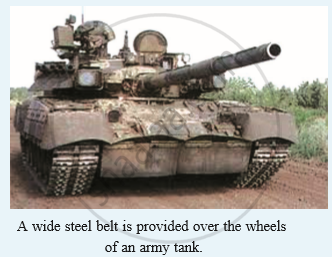
A force of 10 N acts on a body of mass 5 kg. Find the acceleration produced.
When is free fall possible?
