Please select a subject first
Advertisements
Advertisements
Write the structure and IUPAC name of the major product in the following reaction.
\[\begin{array}{cc}
\ce{CH3 - CH - CH2Cl + NaI ->[Acetone]}\\
|\phantom{..................}\\
\ce{CH3\phantom{...............}}
\end{array}\]
Concept: undefined >> undefined
Write the structure and IUPAC name of the major product in the following reaction.
\[\ce{CH3 - CH2Br + SbF3 ->}\]
Concept: undefined >> undefined
Advertisements
Write the structure and IUPAC name of the major product in the following reaction.
\[\begin{array}{cc}
\ce{CH3 - CH - CH = CH2 + HBr ->[peroxide]}\\
|\phantom{........................}\\
\ce{CH3\phantom{.....................}}
\end{array}\]
Concept: undefined >> undefined
Write the structure and IUPAC name of the major product in the following reaction.
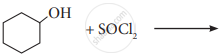
Concept: undefined >> undefined
Write the structure and IUPAC name of the major product in the following reaction.
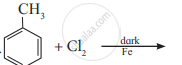
Concept: undefined >> undefined
Give reason:
Alkyl halides are generally not prepared by free radical halogenation of alkanes.
Concept: undefined >> undefined
Convert the following:
But-1-ene to n-butyl iodide
Concept: undefined >> undefined
Resorcinol on distillation with zinc dust gives _________.
Concept: undefined >> undefined
Write structural formulae for 3-Methoxyhexane
Concept: undefined >> undefined
Write a structural formula for methyl vinyl ether.
Concept: undefined >> undefined
Write structural formulae for 1-Ethylcyclohexanol.
Concept: undefined >> undefined
Write structural formula for pentane-1,4-diol.
Concept: undefined >> undefined
Write structural formulae for Cyclohex-2-en-1-ol.
Concept: undefined >> undefined
Write IUPAC name of the following

Concept: undefined >> undefined
Write IUPAC name of the following
\[\begin{array}{cc}\ce{CH3-CH-CH-CH2-OH}\\|\phantom{.....}|\phantom{.......}\\\ce{OH}\phantom{..}\ce{CH3}\phantom{.....}\end{array}\]
Concept: undefined >> undefined
Write IUPAC names of the following

Concept: undefined >> undefined
Write IUPAC names of the following

Concept: undefined >> undefined
Choose the most correct option.
The hybridisation of nitrogen in primary amine is ____________.
Concept: undefined >> undefined
Isobutylamine is an example of ______.
Concept: undefined >> undefined
Choose the most correct option.
Which type of amine does produce N2 when treated with HNO2?
Concept: undefined >> undefined
