Please select a subject first
Advertisements
Advertisements
Figures (A), (B) and (C) given below represent different types of Demand curves.
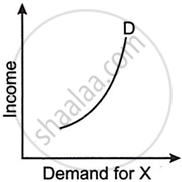 |
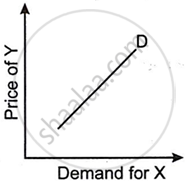 |
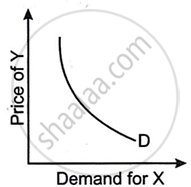 |
| (A) | (B) | (C) |
What kind of goods do each of these Demand curves represent? Give a reason for each of the curves.
Concept: undefined >> undefined
Draw a straight-line demand curve joining both the axes. Indicate the following on the demand curve.
Elasticity of demand is equal to zero
Concept: undefined >> undefined
Advertisements
Find the value of additional investment made by the government when MPC = 0.5 and the increase in income (ΔY) = ₹ 1000.
Concept: undefined >> undefined
Discuss the mechanism of investment multiplier with the help of a numerical.
Concept: undefined >> undefined
Explain the concept of Investment Multiplier using a diagram.
Concept: undefined >> undefined
Mention any one difference between Induced investment and Autonomous investment.
Concept: undefined >> undefined
Illustrate that the investment multiplier is inversely proportional to MPS.
Concept: undefined >> undefined
Differentiate between the expansion of demand and an increase in demand, using diagrams.
Concept: undefined >> undefined
The price of a mobile handset has risen in the market. But the dealers have not been able to increase the supply proportionately.
What will be the price elasticity of supply for the mobile handset? Draw the supply curve to indicate the type of elasticity.
Concept: undefined >> undefined
What is meant by the following function of the central bank?
Clearing house
Concept: undefined >> undefined
What is meant by the following function of the Central bank:
Lender of the last resort
Concept: undefined >> undefined
How does public expenditure on social security schemes enhance production in an economy?
Concept: undefined >> undefined
Calculate GDPmp and NNPfc by Value Added method from the following data.
| PARTICULARS | (₹crores) | |
| (i) | Net value added at factor cost in the Primary sector | 6000 |
| (ii) | Net value added at factor cost in the Secondary sector | 4000 |
| (iii) | Net value added at factor cost in the Tertiary sector | 4500 |
| (iv) | Net Factor Income from Abroad | (-) 50 |
| (v) | Net Indirect taxes | 150 |
| (vi) | Intermediate consumption | 2500 |
| (vii) | Depreciation | 500 |
Concept: undefined >> undefined
Calculate GNPMP and NNPFc from the following data by Expenditure Method.
| PARTICULARS | (₹ crores) | |
| (i) | Mixed income of self employed | 550 |
| (ii) | Private Final Consumption Expenditure | 1100 |
| (iii) | Net factor income from abroad | (-)120 |
| (iv) | Net indirect taxes | 250 |
| (v) | Consumption of fixed capital | 270 |
| (vi) | Net domestic capital formation | 480 |
| (vii) | Net exports | (-)130 |
| (viii) | Interest | 300 |
| (ix) | Government Final Consumption Expenditure | 650 |
Concept: undefined >> undefined
Calculate GDPmp and NNPfc from the following data:
| Items | ₹ (in Crore) | |
| (i) | Wages & salaries | 170 |
| (ii) | Rent | 10 |
| (iii) | Interest | 20 |
| (iv) | Profits | 25 |
| (v) | Dividend | 12 |
| (vi) | Royalty | 5 |
| (vii) | Employer’s contribution to social security | 30 |
| (viii) | Net factor income from abroad | (-) 3 |
| (ix) | Consumption of fixed capital | 34 |
| (x) | Net indirect tax | 38 |
Concept: undefined >> undefined
Explain four ways of redemption of public debt.
Concept: undefined >> undefined
Explain the following method of redemption of Public Debt:
Debt conversion
Concept: undefined >> undefined
Explain the following method of redemption of Public Debt:
Sinking fund
Concept: undefined >> undefined
Differentiate between personal income and private income.
Concept: undefined >> undefined
