Advertisements
Advertisements
For a reaction
\[\ce{2H2O2->[I^-][Alkaline medium]2H2O + O2}\]
The Proposed mechanism is given below:
(1) H2O2+I- → H2O+IO-(slow)
(2) H2O2+IO-→H2O+I-+O2(fast)
(i) Write the rate law for the reaction.
(ii) Write the overall order of a reaction.
(iii) Out of steps(1) and (2), which one is the rate-determining step?
Concept: undefined >> undefined
Write chemical reactions taking place in the extraction of copper from Cu2 S.
Concept: undefined >> undefined
Advertisements
Is 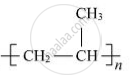 a homopolymer or copolymer? Give reason.
Concept: undefined >> undefined
Why the use of alitame as an artificial sweetener is not recommended?
Concept: undefined >> undefined
Write chemical equations of the following reaction :
Propanone is treated with dilute Ba (OH)2-.
Concept: undefined >> undefined
Write chemical equations of the following reaction :
Benzoyl chloride is hydrogenated in the presence of `"Pd"/(BaSO_4)`
Concept: undefined >> undefined
Write a chemical equation for the following reaction:
Propanone is treated with dilute Ba( OH)2.
Concept: undefined >> undefined
How will you convert the following:
Zinc blende to Zinc metal
Concept: undefined >> undefined
Why the use of alitame as an artificial sweetener is not recommended?
Concept: undefined >> undefined
Write equations of the following reactions:
Carbyl amine reaction
Concept: undefined >> undefined
Account for the following:
o-nitrophenol is more steam volatile than p-nitrophenol.
Concept: undefined >> undefined
Coordination number of hcp and ccp is ____________.
Concept: undefined >> undefined
Which of the following lattices has the highest packing efficiency?
Concept: undefined >> undefined
In cubic close packing (ccp) arrangement, the pattern of the successive layers will be designated as ____________.
Concept: undefined >> undefined
When measuring conductivity with a conductivity cell, cell constant denoted by the symbol G* is given by (electrode area of cross-section equal to ‘A’ and separated by distance ‘l’)
Concept: undefined >> undefined
Substance that enhances the activity of a catalyst is known as ____________.
Concept: undefined >> undefined
The impurity that is added externally to remove the impurity already present in the ore is known as ____________.
Concept: undefined >> undefined
Which one of the following shows the carbylamine reaction in the presence of heat?
Concept: undefined >> undefined
The coordination number in hcp is ____________.
Concept: undefined >> undefined
Which one of the following statements about packing in solids is incorrect?
Concept: undefined >> undefined
