हिंदी

Commerce (English Medium) कक्षा १२ - CBSE Important Questions

Advertisements
विषयों
अध्याय
विषयों
मुख्य विषय
अध्याय

Please select a subject first

Advertisements
Advertisements
< prev  821 to 840 of 4009  next > 

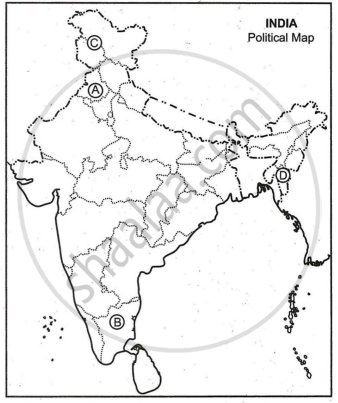
On the given political outline map of India mark and label of the follow with appropriate symbol:

The place where Salt Law was broken by Gandhiji.

Appears in 3 question papers
Chapter: [13] Mahatma Gandhi and the Nationalist Movement: Civil Disobedience and Beyond
Concept: The Salt Satyagraha a Case Study

Assertion (A): Lahore session of Congress in 1929 was significant. 

Reason (R): Proclamation of commitment to 'Poorna Swaraj' or complete independence was passed.

Appears in 3 question papers
Chapter: [13] Mahatma Gandhi and the Nationalist Movement: Civil Disobedience and Beyond
Concept: The Salt Satyagraha a Case Study

Assertion (A): Gandhiji called for a countrywide agitation against the Rowlatt Act. 

Reason (R): British authorized the government to imprison people without trial. 

Appears in 3 question papers
Chapter: [13] Mahatma Gandhi and the Nationalist Movement: Civil Disobedience and Beyond
Concept: The Making and Unmaking of Non-cooperation

Describe the three lists of Federalism provided by the Drafting Committee in the Constituent Assembly.

Appears in 3 question papers
Chapter: [15] Framing the Constitution: the Beginning of a New Era
Concept: A Tumultuous Time

Read the source given below carefully and answer the questions that follow:

"We are not going just to copy"

This is what Jawahar Lal Nehru said in his famous speech of 13 December, 1946:

We say that it is our firm and solemn resolve to have an independent sovereign republic. India is bound to be sovereign, it is bound to be independent and it is bound to be a republic ...

Now, some friends have raised the question: "Why have you not put in the word 'democratic' here?" Well, I told them that it is conceivable, of course, that a republic may not be democratic but the whole of our past is witness to this fact that we stand for democratic institutions. Obviously we are aiming at democracy and nothing less than a democracy. What form of democracy, what shape it might take is another matter. The democracies of the present day, many of them in Europe and elsewhere, have played a great part in the world's progress. Yet it may be doubtful if those democracies may not have to change their shape somewhat before long if they have to remain completely democratic. We are not going just to copy, I hope, a certain democratic procedure or an institution of a so-called democratic country. We may improve upon it. In any event whatever system of government we may establish here must fit in with the temper of our people and be acceptable to them. We stand for democracy. It will be for this House to determine what shape to give to that democracy, the fullest democracy.

  1. Define the term sovereignty.
  2. Which constitutions of the countries were referred by the Constitution Assembly?
  3. How is democracy explained in this source?
Appears in 3 question papers
Chapter: [15] Framing the Constitution: the Beginning of a New Era
Concept: The Vision of the Constitution

Who among the following demanded justice for women, not reserved seats or separate electorates in the Constituent Assembly? 

Appears in 3 question papers
Chapter: [15] Framing the Constitution: the Beginning of a New Era
Concept: Defining Rights

Who among the following in the Constituent Assembly proposed 'horizontal tricolour National flag of saffron, white and green in equal proportion'?

Appears in 3 question papers
Chapter: [15] Framing the Constitution: the Beginning of a New Era
Concept: A Tumultuous Time

Explain the arguments given in favour of strong Centre in the Constituent Assembly. 

Appears in 3 question papers
Chapter: [15] Framing the Constitution: the Beginning of a New Era
Concept: The Powers of the State

Match the following:

  Column-I
(Leaders)
  Column-II -
(Role in the Constituent
Assembly)
A. Jawaharlal Nehru i. President of the Constituent
Assembly
B. B.R. Ambedkar ii. Constitutional Advisor
C. Rajendra Prasad iii. Chairman of the Drafting
Committee
D. B.N. Rau iv. Worked on the 'Objective
Resolution'
Appears in 3 question papers
Chapter: [15] Framing the Constitution: the Beginning of a New Era
Concept: A Tumultuous Time

Consider the given statements regarding Constituent Assembly and select the correct from the following options:

  1. Motilal Nehru moved resolution of National flag in the Constituent Assembly.
  2. G.B. Pant was the Legal Advisor.
  3. Sardar Patel was the Constitutional Advisor.
  4. K.M. Munshi was called as Frontier Gandhi.
Appears in 3 question papers
Chapter: [15] Framing the Constitution: the Beginning of a New Era
Concept: A Tumultuous Time

"One of the topics most vigorously debated in the Constituent Assembly was the respective rights of the Central and State governments." Analyse the statement with supporting arguments.

Appears in 3 question papers
Chapter: [15] Framing the Constitution: the Beginning of a New Era
Concept: The Powers of the State

Let A = {1, 2, 3,......, 9} and R be the relation in A × A defined by (a, b) R (c, d) if a + d = b + c for (a, b), (c, d) in A × A. Prove that R is an equivalence relation. Also, obtain the equivalence class [(2, 5)].

Appears in 3 question papers
Chapter: [1] Relations and Functions
Concept: Types of Relations

Let N denote the set of all natural numbers and R be the relation on N × N defined by (a, b) R (c, d) if ad (b + c) = bc (a + d). Show that R is an equivalence relation.

Appears in 3 question papers
Chapter: [1] Relations and Functions
Concept: Types of Relations

If R=[(x, y) : x+2y=8] is a relation on N, write the range of R.

Appears in 3 question papers
Chapter: [1] Relations and Functions
Concept: Types of Relations

Consider f: `R_+ -> [-5, oo]` given by `f(x) = 9x^2 + 6x - 5`. Show that f is invertible with `f^(-1) (y) ((sqrt(y + 6)-1)/3)`

Hence Find

1) `f^(-1)(10)`

2) y if `f^(-1) (y) = 4/3`

where R+ is the set of all non-negative real numbers.

Appears in 3 question papers
Chapter: [1] Relations and Functions
Concept: Invertible Functions

If `f(x) = (4x + 3)/(6x - 4), x ≠ 2/3`, show that fof (x) = x for all `x ≠ 2/3`. Also, find the inverse of f.

Appears in 3 question papers
Chapter: [1] Relations and Functions
Concept: Types of Relations

The function f(x) = [x], where [x] denotes the greatest integer less than or equal to x; is continuous at ______.

Appears in 3 question papers
Chapter: [1] Relations and Functions
Concept: Types of Functions

Read the following passage:

An organization conducted bike race under two different categories – Boys and Girls. There were 28 participants in all. Among all of them, finally three from category 1 and two from category 2 were selected for the final race. Ravi forms two sets B and G with these participants for his college project.
Let B = {b1, b2, b3} and G = {g1, g2}, where B represents the set of Boys selected and G the set of Girls selected for the final race.

Based on the above information, answer the following questions:

  1. How many relations are possible from B to G? (1)
  2. Among all the possible relations from B to G, how many functions can be formed from B to G? (1)
  3. Let R : B `rightarrow` B be defined by R = {(x, y) : x and y are students of the same sex}. Check if R is an equivalence relation. (2)
    OR
    A function f : B `rightarrow` G be defined by f = {(b1, g1), (b2, g2), (b3, g1)}. Check if f is bijective. Justify your answer. (2)
Appears in 3 question papers
Chapter: [1] Relations and Functions
Concept: Types of Relations

Prove that `cot^(-1)((sqrt(1+sinx)+sqrt(1-sinx))/(sqrt(1+sinx)-sqrt(1-sinx)))=x/2;x in (0,pi/4) `

Appears in 3 question papers
Chapter: [2] Inverse Trigonometric Functions
Concept: Properties of Inverse Trigonometric Functions
 

Prove that:

`tan^(-1)""1/5+tan^(-1)""1/7+tan^(-1)""1/3+tan^(-1)""1/8=pi/4`

 
Appears in 3 question papers
Chapter: [2] Inverse Trigonometric Functions
Concept: Properties of Inverse Trigonometric Functions
< prev  821 to 840 of 4009  next > 
Advertisements
Advertisements
CBSE Commerce (English Medium) कक्षा १२ Important Questions
Important Questions for CBSE Commerce (English Medium) कक्षा १२ Accountancy
Important Questions for CBSE Commerce (English Medium) कक्षा १२ Business Studies
Important Questions for CBSE Commerce (English Medium) कक्षा १२ Computer Science (Python)
Important Questions for CBSE Commerce (English Medium) कक्षा १२ Economics
Important Questions for CBSE Commerce (English Medium) कक्षा १२ English Core
Important Questions for CBSE Commerce (English Medium) कक्षा १२ English Elective - NCERT
Important Questions for CBSE Commerce (English Medium) कक्षा १२ Entrepreneurship
Important Questions for CBSE Commerce (English Medium) कक्षा १२ Geography
Important Questions for CBSE Commerce (English Medium) कक्षा १२ Hindi (Core)
Important Questions for CBSE Commerce (English Medium) कक्षा १२ Hindi (Elective)
Important Questions for CBSE Commerce (English Medium) कक्षा १२ History
Important Questions for CBSE Commerce (English Medium) कक्षा १२ Informatics Practices
Important Questions for CBSE Commerce (English Medium) कक्षा १२ Mathematics
Important Questions for CBSE Commerce (English Medium) कक्षा १२ Physical Education
Important Questions for CBSE Commerce (English Medium) कक्षा १२ Political Science
Important Questions for CBSE Commerce (English Medium) कक्षा १२ Psychology
Important Questions for CBSE Commerce (English Medium) कक्षा १२ Sociology
Share
Notifications

Englishहिंदीमराठी


      Forgot password?
Use app×