Definitions [1]
Define the term hermaphrodite.
Hermaphrodites are those organisms in which the sexes are not separate i.e. both male and female reproductive organs occur in the same individual.
Key Points
- Earliest system - First scientific classification by Aristotle, based on morphological traits.
- Plants - Divided into Herbs, Shrubs, and Trees.
- Animals - Divided into Enaima (with RBCs) and Anaima (without RBCs).
- Limitation - The system was based only on body structure, ignoring other biological features.
- Two Kingdom - Given by Carolus Linnaeus; divided organisms into Plantae and Animalia; proved insufficient as it couldn't distinguish prokaryotes, eukaryotes, fungi, etc.
- Three Kingdom - Given by Ernst Haeckel; added Protista for unicellular organisms; still lacked distinction between prokaryotes and eukaryotes.
- Four Kingdom - Given by Herbert F. Copeland; introduced Monera (prokaryotes), Protista, Plantae and Animalia; first to recognise prokaryote-eukaryote difference.
- Five Kingdom - Given by R. H. Whittaker (1969); kingdoms - Monera, Protista, Fungi, Plantae, Animalia; based on cell structure, nutrition, reproduction and phylogenetic relationships.
- Six Kingdom - Given by Carl Woese; split Monera into Bacteria and Archaea; recognised archaea as distinct based on genetic and biochemical differences.
- Monera - Primitive, single-celled prokaryotes; includes archaebacteria, cyanobacteria, mycoplasma and eubacteria. e.g. Bacteria, Oscillatoria, Nostoc.
- Protista - Single-celled eukaryotes, mainly aquatic; includes diatoms, golden algae, Euglena, and protozoans; often photosynthetic. e.g. Amoeba, Paramecium, Plasmodium.
- Fungi (Mycota) - Made of thread-like mycelium and hyphae; mostly saprophytes, parasites and symbionts; includes lichens and mycorrhiza. e.g. Aspergillus.
- Plantae (Metaphyta) - Multicellular plants with chlorophyll; includes herbs, shrubs, trees, flowering and non-flowering plants. e.g. Rose plant, Mango tree, Algae, Bryophytes.
- Animalia (Metazoa) - Heterotrophic, multicellular organisms; lack a cell wall; include all types of animals. e.g. Lion, Peacock.
| Characters | Monera | Protista | Fungi | Plantae | Animalia |
|---|---|---|---|---|---|
| Cell type | Prokaryotic | Eukaryotic | Eukaryotic | Eukaryotic | Eukaryotic |
| Cell wall | Non-cellulosic (polysaccharide + amino acids) | Present in some | Present (without cellulose) | Present (of cellulose) | Absent |
| Nuclear membrane | Absent | Present | Present | Present | Present |
| Body organisation | Cellular | Cellular | Multicellular / Loose tissue | Tissue/organ | Tissue/organ/organ system |
| Mode of nutrition | Autotrophic (chemosynthetic & photosynthetic) and Heterotrophic (saprophytic/parasitic) | Autotrophic (photosynthetic) and Heterotrophic | Heterotrophic (saprophytic/parasitic) | Autotrophic (photosynthetic) | Heterotrophic (holozoic/saprophytic etc.) |
| Merits | Demerits |
|---|---|
| Scientific and natural, widely accepted | Drawbacks concerning lower life forms |
| Animals are grouped phylogenetically | Monerans and protists include diverse forms with mixed characteristics |
| Prokaryotes are placed separately due to organisational differences | Not all organisms in these kingdoms share a common ancestor |
| Unicellular organisms are categorised under Protista, resolving positioning issues | Multicellular organisms have arisen from protists multiple times |
| Fungi’s distinctiveness justifies kingdom status | Issues with the placement of unicellular green algae within Protista |
| Plantae and Animalia show phylogeny of different lifestyles | Slime moulds’ organisation differs from Protists |
| Provides a clear indication of cellular organisation and modes of nutrition | Viruses are not adequately classified |
- Meaning - Ancient, primitive microorganisms; also called extremophiles as they survive in extremely harsh conditions like hot springs, volcanoes, salty areas and deep sea.
- Halophiles - Live in extremely salty environments. e.g. salt lakes.
- Thermoacidophiles/Thermophiles - Live in hot water areas like geysers, hydrothermal vents and volcanoes.
- Methanogens - Found in the gut of ruminants and marshy areas; produce methane gas from dung.
- Difference - Archaebacteria are different from regular bacteria and blue-green algae in their structure and biochemistry.
- Meaning - Also known as blue-green algae; contain chlorophyll 'a' and perform photosynthesis; found in marine and terrestrial environments.
- Forms - Can be unicellular, colonial or filamentous; often surrounded by a gelatinous sheath; form algal blooms in polluted water.
- Reproduction - By fragmentation, hormogones (small trichome segments that separate naturally) and akinetes (thick-walled resting spores).
- Nitrogen fixation - Some fix atmospheric nitrogen using specialised cells called heterocysts. e.g. Nostoc, Anabaena.
- Ecological role - Protect against soil erosion and help in the reclamation of saline and alkaline soil.
| Archaebacteria | Eubacteria |
|---|---|
| They are extremophiles and thrive in harsh conditions | Eubacteria are true bacteria with rigid cell walls |
| Lack traditional cell wall; have unique lipid-based membrane | May show motile flagellum for locomotion |
| Ribosomes are similar to eukaryotes | Classified based on nutrition and shape |
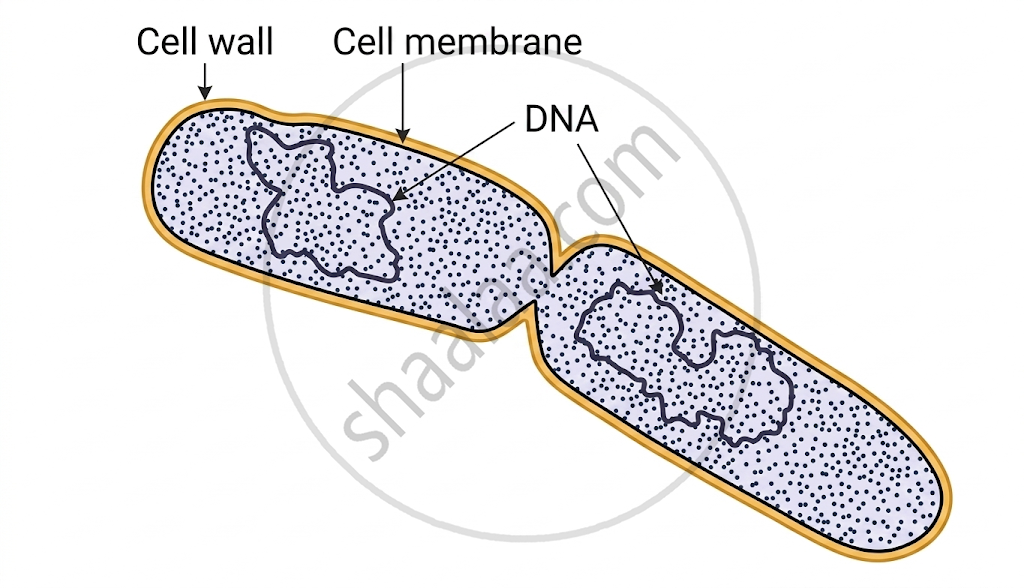
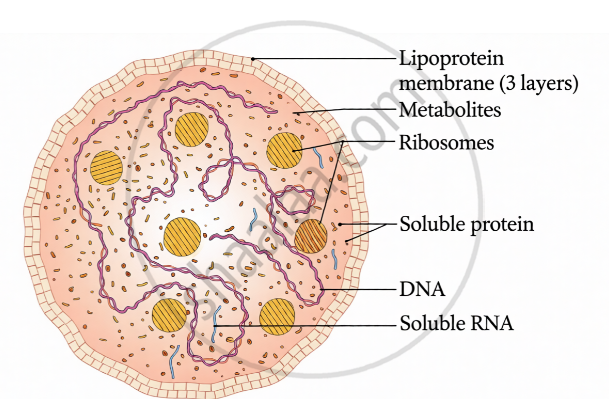
| Heterotrophic Bacteria | Mycoplasma |
|---|---|
| Decomposers help in milk curdling and produce antibiotics. | Tiny organisms found in soil and sewage water. |
| Symbiotic nitrogen fixers; some are pathogenic. | Smallest living organisms (0.1–0.15 µm in diameter). |
| Reproduces mainly by fission and sporulation. | Unicellular, gram-negative, non-motile and lack a cell wall. |
| Can reproduce sexually by conjugation. | Pathogenic; cause diseases like pneumonia in plants and animals. |
 |
 |
1. Meaning - All single-celled eukaryotes act as a link between plants, animals and fungi; mostly aquatic; have a nucleus and membrane-bound organelles.
2. Chrysophytes - Includes diatoms and golden algae; cell wall has silica; deposits form Diatomaceous Earth (used in polishing and filtration); chief producers in oceans.
3. Dinoflagellates - Mostly marine, photosynthetic; cell wall of cellulosic plates; have two flagella (one longitudinal, one transverse); rapid multiplication of red dinoflagellates (e.g. Gonyaulax) causes red tides.
4. Euglenoids - Have a pellicle instead of a cell wall; photosynthetic in sunlight but become heterotrophs in its absence. e.g. Euglena.
5. Slime Moulds - Saprophytic; feed on decaying matter; undergo syngamy to form a plasmodium that spreads over several feet.
6. Protozoans - 4 types:
- Amoeboid - move by pseudopodia. e.g. Amoeba, Entamoeba
- Flagellated - have flagella; cause sleeping sickness. e.g. Trypanosoma
- Ciliated - have cilia; have a gullet for feeding. e.g. Paramecium
- Sporozoans - no locomotory organelle; all parasitic. e.g. Plasmodium
1. Meaning - Heterotrophic organisms; body made of thread-like hyphae; network of hyphae = mycelium; cell wall made of chitin; grow in warm and humid places; except yeasts, all are multicellular.
2. Nutrition - Can be saprophytic (feed on dead matter), parasitic or symbiotic (as lichens and mycorrhiza).
3. Reproduction - Asexual by spores (conidia, zoospores, aplanospores); sexual reproduction involves 3 steps - plasmogamy → karyogamy → meiosis; Ascomycetes and Basidiomycetes undergo a dikaryotic stage.
4. 4 Classes of Fungi:
- Phycomycetes - Mycelium aseptate, coenocytic; spores endogenous in sporangium. e.g. Rhizopus, Albugo
- Ascomycetes (Sac fungi) - Asexual spores = conidia; sexual spores = ascospores in ascus. e.g. Aspergillus, Neurospora
- Basidiomycetes - No asexual spores; sexual spores = basidiospores (exogenous). e.g. Agaricus, Ustilago, Puccinia
- Deuteromycetes (Imperfect Fungi) - Sexual form unknown; saprophytic/parasitic. e.g. Alternaria, Colletotrichum
5. Classification basis - Based on morphology, mode of spore formation and fruiting bodies.
6. Important examples - Puccinia (wheat rust), Penicillium (antibiotic), Agaricus (mushroom), Neurospora (genetic research).
1. Meaning- All eukaryotic, chlorophyll-containing organisms; cell wall made of cellulose; mostly autotrophic; some are insectivorous (e.g. Venus fly trap, Bladderwort) or parasitic (e.g. Cuscuta).
2. Members - Includes algae, bryophytes, pteridophytes, gymnosperms and angiosperms.
3. Alternation of generations - Life cycle has two phases - diploid sporophyte and haploid gametophyte - which alternate with each other.
4. Plant groups at a glance:
- Algae - Simple, aquatic, no true roots/stems/leaves. e.g. Seaweed, Green algae
- Bryophytes - Non-vascular, moist environments. e.g. Mosses, Liverworts
- Pteridophytes - Vascular, no seeds, reproduce by spores. e.g. Ferns
- Gymnosperms - Naked seeds in cones, no flowers/fruits. e.g. Pine, Fir
- Angiosperms - Seeds enclosed in fruits, the most diverse group. e.g. Rose, Lily
5. Key features - Have prominent chloroplasts for photosynthesis; membrane-bound organelles; the most diverse group among all kingdoms.
- Meaning - Heterotrophic, multicellular eukaryotes; cells lack a cell wall; cannot produce their own food.
- Nutrition - Mode of nutrition is holozoic (food obtained by ingestion); food is digested in an internal cavity; food is stored as glycogen or fat.
- Reproduction - By sexual reproduction - copulation of male and female followed by embryological development.
- Other features - Follow a definite growth pattern; higher forms have elaborate sensory and neuromotor mechanisms (nervous system and sensory organs); most are capable of locomotion.
- Cell structure - Has a nucleus and membrane-bound organelles; no chloroplasts (hence cannot photosynthesise); no cell wall (unlike plants and fungi).
| Characters | Kingdom Plantae (Metaphyta) | Kingdom Animalia (Metazoa) |
|---|---|---|
| Cell Type | Eukaryotic and multicellular | Eukaryotic and multicellular |
| Photosynthetic pigment | Present (Chlorophyll) | Absent |
| Types | Herbs, shrubs, trees, flowering, non-flowering | Aquatic, terrestrial, vertebrates and invertebrates |
| Cell wall composition | Made of cellulose | Lacks a cell wall |
| Reproduction | Asexual and sexual (alternation of generations – gametophytic and sporophytic) | Asexual and sexual |
| Nutrition | Autotrophic | Heterotrophic |
| Food reserves | Stored as starch | Stored as fat or glycogen |
| Locomotion | Generally immobile | Capable of locomotion |
| Growth pattern | Shows a definite growth pattern | Shows a definite growth pattern |
| Dependency | Depends on sunlight for energy generation | Depends on plants directly and indirectly for survival |
Viruses
- Viruses are non-living outside a host, but become active inside living cells.
- They are nucleoproteins with a protein coat (capsid) and genetic material (DNA or RNA).
- They can have different structures, like helical or polyhedral.
- Cause diseases like influenza, AIDS, mumps, smallpox in humans and mosaic disease in plants.
- They can form crystalline structures outside the host and do not fit in the Whittaker classification.
Viroids
- Viroids are the smallest infectious agents, discovered by T.O. Diener (1971).
- They consist of only RNA, without a protein coat.
- Cause plant diseases like potato spindle tuber disease.
- Have low molecular weight and a simple structure.
- Can replicate independently inside host plants.
Prions
- Prions are infectious proteins without DNA or RNA.
- They cause neurodegenerative diseases in humans and animals.
- Examples include CJD, mad cow disease (BSE), and scrapie.
- Disease occurs due to the misfolding of normal proteins.
- Lead to brain damage and death.
Lichens
- Lichens are a symbiotic association between algae and fungi.
- Algae prepare food, while fungi provide shelter and nutrients.
- Lichens act as pollution indicators and are absent in polluted areas.
- Based on structure, lichens are of three types: crustose (crust-like and tightly attached), foliose (leaf-like and loosely attached), and fruticose (branched or bushy).
- Examples include Lecanora (crustose), Peltigera (foliose), and Ramalina (fruticose).
Concepts [17]
- Introduction of Biological Classification
- Systems of Classification
- Types of Classification
- General Features of Five Kingdoms
- Characteristics of the Five Kingdoms
- Merits and Demerits of the Five Kingdom Classification
- Kingdom Monera
- Archaebacteria
- Cyanobacteria
- Archaebacteria vs Eubacteria
- Heterotrophic bacteria vs Mycoplasma
- Kingdom Protista
- Kingdom Fungi
- Kingdom Plantae
- Kingdom Animalia
- Kingdom Plantae vs Kingdom Animalia
- Viruses, Viroids, Prions and Lichens
