Advertisements
Advertisements
प्रश्न
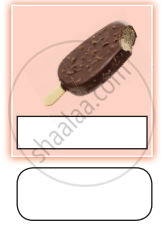
You find it tough to learn a new language ______
विकल्प
anxious
worried
thankful
excited
dejected
joyous
proud
Advertisements
उत्तर
You find it tough to learn a new language- dejected
APPEARS IN
संबंधित प्रश्न
How does Seattle justify his religion as opposed to what the white men had said about it?
Answer the following questions with reference to Ray Douglas Bradbury’s short story, ‘All Summer in a Day’:
Why was there so much excitement in the schoolroom that morning? What sets Margot apart from the other children?
Maintain a record of the trees cut down and the parks demolished in your area or any other act that violates the environment. Write to newspapers reporting on any such acts that disturb you.
Look at these sentences.
- Deserts are the driest places on earth.
- Gerbils spend the hottest part of the day in cool underground burrows.
Now form pairs. Ask questions using a suitable form of the word in brackets. Try to answer the questions too.
Do you know
1. Which animal is the _______________________ (tall)?
2. Which animal runs the _______________________ (fast)?
3. Which place on earth is the _______________________ (hot) or the _______________________ (cold)?
4. Which animal is the _______________________ (large)?
5. Which is the ————————————— (tall) mountain in the world?
6. Which is the _______________________ (rainy) place on earth?
7. Which is the ________________________ (old) living animal?
Can you add some questions of your own?
The poet is prompted to call the sower an ‘august personality’ which means one who has reached the highest position in his workplace.
Explain this using the following point.
Perseverance
Start a collection of proverbs. A proverb is a short, well-known sentence or phrase that gives advice or tells you what is generally true. For example, ‘A stitch in time saves nine’ means ‘If one does something in time or immediately, it saves a lot of work later’. A proverb is also known as a saying. Here are some proverbs for your collection.
- Appearances can be deceptive.
- Do not judge by appearance; a rich heart may be under a poor coat.
- All that glitters is not gold.
- You can’t tell a book by its cover.
- Clothes do not make the man.
Write about your feelings and reactions in 4-5 lines.
You may describe your feelings and reactions using other words than those given here
Archaic words are those that are no longer used in a language, but sometimes their usage adds a historical or old-times flavour to a piece of writing.
Examples:
- behold – look
- afeared – frightened
- forsooth – indeed
- hither – this place
Now find out some archaic words from your mother tongue or another language that you are proficient in and write down at least ten of them, and against each, their modern equivalent and meaning in English.
| Archaic Language | |||
| Archaic Word | Modern Equivalent | Meaning in English | |
| 1. | |||
| 2. | |||
| 3. | |||
| 4. | |||
| 5. | |||
| 6. | |||
| 7. | |||
| 8. | |||
| 9. | |||
| 10. | |||
Alice follows the strange rabbit because she wants to know a number of things. Re-arrange the words to make the questions that Alice has in her mind, and put a question mark (?).
going he is where
Urban living brings with it a possibility of various communicable diseases.
Now write an article of about 150 words for a leading newspaper on the various ways of maintaining personal hygiene and sanitation in order to ensure a healthy living. Make use of the hints given below
Hints:
a) Introduction – ‘Cleanliness is next to Godliness’ – brief explanation
b) Personal hygiene
(i) Frequent washing of hands and regular bathing
(ii) Brushing of teeth, trimming of nails and hair
(iii)Wearing clean clothes
c) Keeping diseases at bay
(i) Avoid street food
(ii) Keep food containers covered
(iii)Drink boiled water
(iv) Wash fruits and vegetables in flowing water
d) Keeping living areas, surroundings and the environment clean
(i) Disposal of domestic organic waste on a daily basis and hazardous waste in designated places
(ii) Regular sweeping, mopping and dusting
(iii)Disinfection of toilets and bathing areas
(iv) Avoid littering of public places
(v) Avoid spitting, urinating and defecating in public places
e) Conclusion – hygiene – a collective exercise – everyone’s involvement and practice, a must – ensure community health and happiness – celebrate life