Advertisements
Advertisements
प्रश्न
Write a note on coagulation of blood.
Advertisements
उत्तर
- Clotting or coagulation is the process of converting the liquid blood into a solid form. This process may be initiated by contact of blood with any foreign surface (intrinsic process) or with damaged tissue (extrinsic process).
- Intrinsic and extrinsic processes involve interaction of various substances called clotting factors by a step wise or cascade mechanism.
- There are in all twelve clotting factors numbered as I to XIII (factor VI is not in active use). Interaction of these factors occurs in cascade manner leading to formation of the enzyme thrombin.
- Thromboplastin helps in the formation of enzyme prothrombinase. This enzyme inactivates heparin and it also converts inactive prothrombin into its active thrombin.
- Thrombin converts soluble blood protein fibrinogen into insoluble fibrin. Fibrin forms a mesh in which platelets and other blood cells are trapped to form the clot.
APPEARS IN
संबंधित प्रश्न
Give appropriate biological or technical terms for the following:
Squeezing out of white blood cells from the capillaries into the surrounding tissues.
Name the following:
The cells which transport oxygen to the different parts of the human body.
Differentiate between members of the following pair with reference to phrase in bracket:
RBC and WBC (structure)
An anticoagulant present in the blood is ______.
Name the following:
The phase of the cardiac cycle in which the ventricles get filled with blood from the atrium.
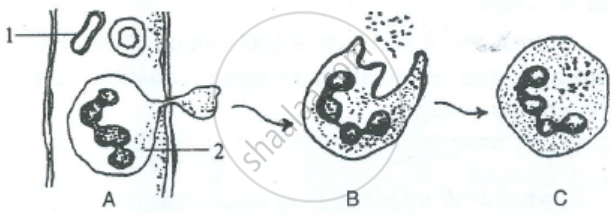
Study the following diagram carefully and then answer the question that follow:
Identify the phenomenon occurring in A.
True or false:
Platelets help in clotting of blood.
Define the following term:
Diapedesis
The diagram shows different types of blood cells, Name them.
A __________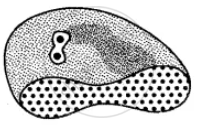
B ______________
C ____________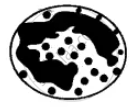
D _______________

E ____________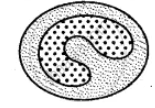
F ____________
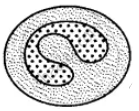
G ______________
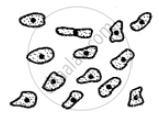
H ______________
Complete the following sentence with appropriate word:
The site of production of W.B.Cs in the embryo is _________
