Advertisements
Advertisements
प्रश्न
Two mobiles cost 16,000 rupees. How much money will be required to buy 13 such mobiles?
Advertisements
उत्तर
Let us suppose the cost of 13 mobiles is x rupees.
The number of mobiles and their cost vary in direct proportion.
∴ `2/16000 = 13/x`
⇒ x = `(13 xx 16000)/2`
x = ₹ 1,04,000
Hence, the cost of 13 mobiles is ₹ 1,04,000.
संबंधित प्रश्न
A can do a piece of work in 40 days and B in 45 days. They work together for 10 days and then B goes away. In how many days will A finish the remaining work?
Working 8 hours a day, Ashu can copy a book in 18 days. How many hours a day should he work so as to finish the work in 12 days?
If the cost of 6 cans of juice in ₹ 210, then what will be the cost of 4 cans of juice?
Both x and y are in direct proportion, then `1/x` and `1/y` are ______.
The area of cultivated land and the crop harvested is a case of direct proportion.
Write whether the following statement vary directly, vary inversely with each other, or neither of the two.
Number of students in a hostel and consumption of food.
If 25 metres of cloth costs Rs 337.50, then what will be the length of the cloth bought for Rs 810?
Work with a partner to write at least five ratio statements about this quilt, which has white, blue, and purple squares.
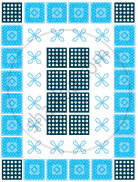
How many squares of each colour will be there in 12 such quilts?
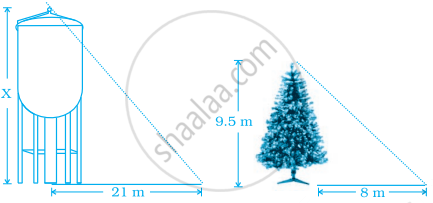
A water tank casts a shadow 21 m long. A tree of height 9.5 m casts a shadow 8 m long at the same time. The lengths of the shadows are directly proportional to their heights. Find the height of the tank.
Kritika is following this recipe for bread. She realises her sister used most of sugar syrup for her breakfast. Kritika has only `1/6` cup of syrup, so she decides to make a small size of bread. How much of each ingredient shall she use?
Bread recipe
1 cup quick cooking oats
2 cups bread flour
`1/3` cup sugar syrup
1 tablespoon cooking oil
`1 1/3` cups water
3 tablespoons yeast
1 teaspoon salt.
