Advertisements
Advertisements
प्रश्न
The zero of the polynomial 2x + 5 is
विकल्प
`5/2`
`-5/2`
`2/5`
`-2/5`
Advertisements
उत्तर
`-5/2`
Explanation;
Hint:
2x + 5 = 0
⇒ 2x = −5
⇒ x = `-5/2`
APPEARS IN
संबंधित प्रश्न
Find p(0), p(1) and p(2) for the following polynomial:-
p(y) = y2 – y + 1
Find p(0), p(1) and p(2) for the following polynomial:-
p(t) = 2 + t + 2t2 – t3
Verify whether the following zeroes of the polynomial are indicated against them.
p(x) = 5x – π, `x = 4/5`
Verify whether the following zeroes of the polynomial, indicated against them.
p(x) = x2 – 1, x = 1, –1
Verify whether the following zeroes of the polynomial, indicated against them.
p(x) = (x + 1) (x – 2), x = – 1, 2
Verify whether the following zeroes of the polynomial, indicated against them.
p(x) = x2, x = 0
Verify whether the following zeroes of the polynomial, indicated against them.
p(x) = 2x + 1, `x = 1/2`
Find the zero of the polynomial in the following case:
p(x) = x + 5
Find the zero of the polynomial in the following case:
p(x) = 3x – 2
Find the zero of the polynomial in the following case:
p(x) = ax, a ≠ 0
Verify whether the indicated numbers is zeroes of the polynomials corresponding to them in the following case:
`f ( x ) = 3x +1, x = - 1/3`
Verify whether the indicated numbers is zeroes of the polynomials corresponding to them in the following case:
`f(x)=x^2- 1,x=1,-1`
Verify whether the indicated numbers is zeroes of the polynomials corresponding to them in the following case:
`g(x)=3x^2-2,` `x=2/sqrt3 2/sqrt3`
Verify whether the indicated numbers is zeroes of the polynomials corresponding to them in the following case:
`f ( x) = x^2and x = 0`
If `x = −1/2` is a zero of the polynomial `p(x)=8x^3-ax^2 -+2` find the value of a.
Find the value of the polynomial 5x – 4x2 + 3 at x = –1.
Verify whether the following are zeros of the polynomial indicated against them, or not
p(x) = 2x − 1, x = `1/2`
Find the number of zeros of the following polynomial represented by their graph
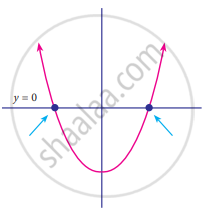
Find the number of zeros of the following polynomial represented by their graph
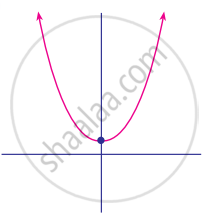
Find the number of zeros of the following polynomial represented by their graph

Zeros of (2 – 3x) is ___________
If `p(x) = x^2 - 2sqrt(2)x + 1`, then `p(2sqrt(2))` is equal to ______.
Zero of the zero polynomial is ______.
A polynomial cannot have more than one zero
Find the zeroes of the polynomial in the following:
h(y) = 2y
If a, b, c are all non-zero and a + b + c = 0, prove that `a^2/(bc) + b^2/(ca) + c^2/(ab) = 3`.
