Advertisements
Advertisements
प्रश्न
The ear ossicle which is attached to the tympanum.
Advertisements
उत्तर
Malleus
संबंधित प्रश्न
For human ears, the audible range is 20 Hz to 20,000 Hz.
Briefly explain the following terms: Power of accommodation
Name the following:
The ear ossicle attached to the tympanum.
Differentiate between members of the following pair with reference to what is asked in bracket.
Semi-circular canal and cochlea (Senses perceived)
State whether the following statements are true (T) or false (F). If false, correct them by changing any one single word in each.
Deafness is caused due to rupturing of the pinna.
What is the name of passage in outer ear which carries sound waves to the ear-drum ?
The figure below is the sectional view of a part of the skull showing a sense organ:
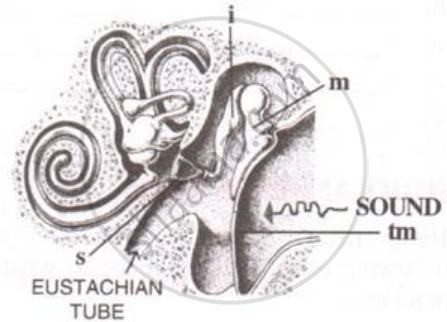
Name the part labeled 'tm'. What is its function?
Select the CORRECT match of part of the human ear and its function.
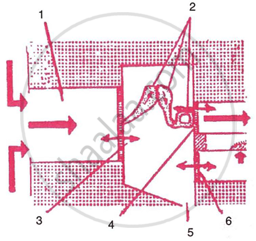
Given below is a diagrammatic representation of a part of the human ear.
- Name the parts numbered 1-6.
- Which parts of the ear shown here are complete.
 |
Define the following term:
Ear ossicles
