Advertisements
Advertisements
प्रश्न
The atomic number of an element is 9, it has 10 neutrons. Find the element from the periodic table. What will be its mass number?
Advertisements
उत्तर
The element is Fluorine
Its mass number A
= n + p
= 10 + 9 = 19
∴Mass number of Fluorine = 19
APPEARS IN
संबंधित प्रश्न
What are the atomic numbers of elements whose outermost electrons is represented by 3s1.
Tick the most appropriate answer.
Which of these have similar chemical properties but different set of physical properties and mass number?
- isobars
- elements
- isotopes
- none of these
From the symbol `""_15^31"P"`, state :
(i) mass number of phosphorus,
(ii) atomic number of phosphorus, and
(iii) electron configuration of phosphorus.
Elements X, Y and Z have atomic numbers 6, 9 and 12 respectively. Which one:
- Forms an anion
- Forms a cation
- Has four electrons in its valence shell?
What is meant by the 'atomic number of an element'?
The diagram represents an isotope of hydrogen [H]. Answer the following:
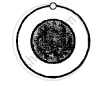
Atomic no. = 1
Mass no. = 1
Which sub-atomic particles in the 3 isotopes of ‘H’ are the same.
The atomic number and the mass number of an element is 26 and 56 respectively. Calculate the number of electrons, protons and neutrons in its atom. Draw the structure.
Name the 3 sub-atomic particles of an atom.
If an atom has 6 electrons in its outermost shell, it is inert.
Match the following:
| Column A | Column B | ||
| 1. | Mass of proton | a. | +1 |
| 2. | Mass of electron | b. | -1 |
| 3. | Charge of electron | c. | 9.31 x 10⁻²⁸g |
| 4. | Charge of proton | d. | 1.67 x 10⁻²⁴g |
