Advertisements
Advertisements
प्रश्न
On the grounds of improving administrative efficiency, how Curzon justified the partition of Bengal.
Advertisements
उत्तर
Lord Curzon, who was the Viceroy of India from 1898 to 1905, became unpopular in India. The reason was that he had followed a policy against the Indians. He tried to justify the partition of Bengal by explaining that Bengal was too large as a province to be administrated by a single Governor. He, even in this dispatch, mentioned the view-points of Sir A. Fraser, Lt. Governor of Bengal. He said that the Presidency of Bengal had become large and unwieldy. It consisted of Bengal, Bihar, Orissa, Chhota Nagpur and some other far off areas. It extended over an area of about 4,89,500 sq. km. It had a huge population of about 7.8 million. The Royal assent was given on 18th September, 1905 to the proposals of Lord Curzon for the division of Bengal. According to this, the new province was created by amalgamating Assam and Chittagong with fifteen districts of old Bengal. The area of this new province was about 2,74,540 sq. km. and its population was about 31 million.
संबंधित प्रश्न
Mention one important anti-India policy adopted by Lord Curzon, which brought about aggressive nationalism in India.
What was the main impact of the partition of Bengal on the national movement?
What is meant by Swadeshi?
Which countries used the idea of Swadeshi and Boycott before it was used in the Indian National Movement?
What was Lord Curzon’s argument in favour of the partition of Bengal.
Or
What was the motives of Lord Curzon behind the Partition?
Briefly describe how the partition of Bengal led to die separatist tendency between the Hindus and Muslims.
What did the people do to make Swadeshi and Boycott Movement more successful.
Discuss how Anti-Partition Movement gave a stimulus to indigeneous industries.
Discuss how Curzon striked at the roots of Bengal nationalism to weaken the National Movement.
Answer the following:
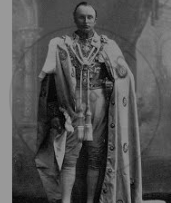
(i) Name the person in the picture given alongside.
(ii) Which event the person showing in the picture was associated with? What justification he give for that incident.
