Advertisements
Advertisements
प्रश्न
In the following figure, area of (i) is the same as the area of (ii).
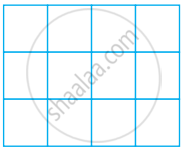 |
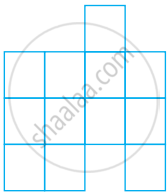 |
| (i) | (ii) |
विकल्प
True
False
Advertisements
उत्तर
This statement is True.
Explanation:
|
|
| (i) | (ii) |
By observing the figure, we can say that area of both figures are same because number of blocks used in both figures are same.
APPEARS IN
संबंधित प्रश्न
The diagonal of a square is 12 cm long; find its area and length of one side.
The perimeter of a square is numerically equal to its area. Find its area.
A wire, when bent in the form of a square encloses an area of 484 cm2. Find :
(i) one side of the square ;
(ii) length of the wire ;
(iii) the largest area enclosed; if the same wire is bent to form a circle.
Find the perimeter and the area of the square whose side is 8 cm
Find the perimeter of the following figure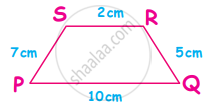
Find the perimeter of the following figure
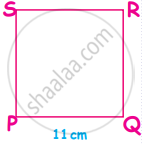
1 m = ______ cm.
1 sq m = ______ sq cm.
Find the cost of fencing a square park of side 250 m at the rate of ₹ 20 per metre.
Sweety runs around a square park of side 75 m. Bulbul runs around a rectangular garden with a length of 60 m and a breadth of 45 m. Who covers less distance?
