Advertisements
Advertisements
प्रश्न
Advertisements
उत्तर
Case (i) Energy consumed by two bulbs per day
= 2 x `60 /1000` x 4= 0.48 kWh
Case (ii) Energy consumed by three bulbs per day
= 3 x `100/1000` x 5 = 1. 5 kWh
:. total energy consumed per day = 0.48 + 1.5 = 1.98 kWh
Required consumption of electrical during the month of June (30 days)=
= 1.98 x 30 = 59.4 kWh
APPEARS IN
संबंधित प्रश्न
List the names of three electrical gadgets used in your house. Write their power, voltage rating and approximate time for which each one is used in a day. Hence, find the electrical energy consumed by each in a day.
An electric iron is rated at 750 W, 230 V. Calculate the electrical energy consumed by the iron in 16 hours .
Calculate the resistance of an electric bulb which allows a 10 A current when connected to a 220 V power source.
A current passes through a resistor. Let K1 and K2 represent the average kinetic energy of the conduction electrons and the metal ions, respectively.
An immersion heater rated 1000 W, 220 V is used to heat 0.01 m3 of water. Assuming that the power is supplied at 220 V and 60% of the power supplied is used to heat the water, how long will it take to increase the temperature of the water from 15°C to 40°C?
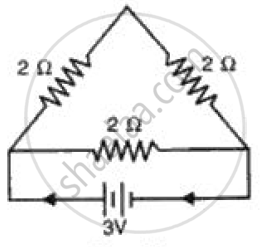
What is the current I in the given circuit (Fig. )?
An electric bulb is marked 100 W, 230 V. What does this mean?
What is the function of the split rings in a d.c. motor?
Why is the electric power from the generating station transmitted at high voltage?
