Advertisements
Advertisements
प्रश्न
In a karyotype analysis, X and Y chromosomes represent sex chromosomes.
Name the scientist who discovered the X chromosome.
Advertisements
उत्तर
The German biologist Hermann Henking discovered the X chromosome.
APPEARS IN
संबंधित प्रश्न
What is gene pool?
Explain the types of chromosomes on the basis of position of centromere.
Choose the correct options of the following question:
Study the given monohybrid cross:
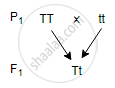
A test cross for this Fj will be:
Identify the term that represents the degree of repetition of the primary basic number of chromosomes in a cell.
Extranuclear inheritance occurs in ______.
Two or more independent genes present on different chromosomes which determine nearly same phenotype are called ______.
A couple has two daughters. What is the probability that the third child will also be a female?
Who postulated the 'Chromosomal theory of inheritance'?
Which of the following is sex chromosomal disorder?
Consider the following information and answer the question that follows:
|
Make a single pedigree chart using the above information to show the pattern of inheritance of phenylketonuria (PKU) in the family of Reshma.
