Advertisements
Advertisements
प्रश्न
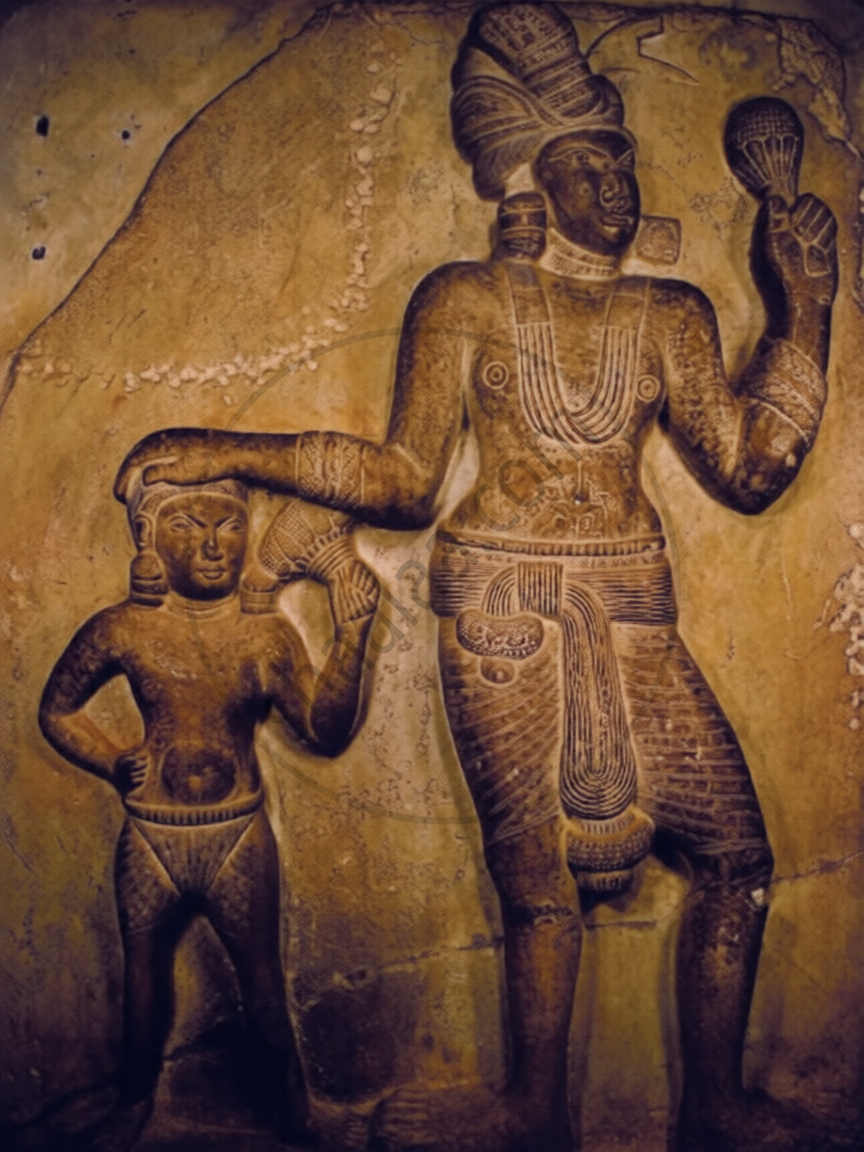
How has the sculptor shown the difference between the chief and his follower?
कृति
Advertisements
उत्तर
The sculptor has visually distinguished the chief from his follower using distinct artistic techniques that emphasise hierarchical status and power:
- Relative Size and Scale
- Hieratic Scale: The chief is carved significantly larger and taller than the follower.
- Visual Dominance: This stark difference in physical stature immediately establishes the chief’s supremacy.
- Elaborate Headgear and Attire
- Ornate Turban: The chief wears an exceptionally large, highly detailed turban or headdress.
- Intricate Drapery: His lower garment and heavy central waistband feature complex, stylised folds.
- Simpler Follower: The follower is shown with a smaller, plain hairstyle and minimal waist cloth.
- Ornamentation and Jewellery
- Heavy Adornment: The chief is decorated with layered necklaces, thick wristbands, and distinct armlets.
- Fewer Accessories: The follower wears much lighter and simpler ornaments.
- Gestures and Body Language
- Authoritative Stance: The chief stands upright in a powerful stance, holding an emblem or weapon aloft in his left hand.
- Subordinate Placement: The chief’s right hand rests heavily on top of the follower’s head, symbolising dominance, ownership, and protection.
shaalaa.com
क्या इस प्रश्न या उत्तर में कोई त्रुटि है?
