Advertisements
Advertisements
प्रश्न
How does a gene therapy involving direct modification of the cells, in order to achieve a therapeutic goal is used in the treatment of ADA deficiency? Explain.
Advertisements
उत्तर
The first clinical gene therapy was given in 1990 to a 4-year-old girl with adenosine deaminase (ADA) deficiency. This enzyme is crucial for the immune system to function. The disorder is caused due to the deletion of the gene for adenosine deaminase. In some children ADA deficiency can be cured by bone marrow transplantation; in others it can be treated by enzyme replacement therapy, in which functional ADA is given to the patient by injection. But the problem with both of these approaches that they are not completely curative. As a first step towards gene therapy, lymphocytes from the blood of the patient are grown in a culture outside the body. A functional ADA and rDNA (using a retroviral vector) are then introduced into these lymphocytes, which are subsequently returned to the patient. However, as these cells are not immortal, the patient requires periodic infusion of such genetically engineered lymphocytes. However, if the gene isolate from marrow cells producing ADA is introduced into cells at early embryonic stages, it could be a permanent cure.
संबंधित प्रश्न
State the cause of ADA deficiency in humans.Mention a possible cure for an ADA deficiency patient.
Describe the steps that are followed during secondary treatment of sewage.
How many amino acids are arranged in the two chains of Insulin?
How is the amplification of a gene sample of interest carried out using PCR?
How was Insulin obtained before the advent of rDNA technology? What were the problems encountered?
Explain how ADA deficiency can be corrected?
Eli Lilly's contribution for diabetic patients through r-DNA technology has been overwhelmingly accepted. Explain how?
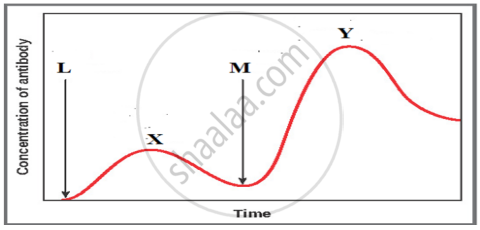
The graph given below indicates the administration of the first (L) and second dose (M) of a vaccine. The corresponding response of the body is indicated by X, and Y. Interpret the graph and explain the reason for such a response shown by the body.
Choose the INCORRECT statement.
Globally, approximately how many recombinant therapeutics have been approved for human use, and how many of them are currently marketed in India?
