Advertisements
Advertisements
प्रश्न
How did the educational backwardness of the Muslims lead to the growth of communalism in the early years of the 20th century.
Advertisements
उत्तर
The Muslims were not attracted by the Western science, Democracy or Nationalism. The Hindus, in those days were more educated in the Western sciences and culture than the Muslims. Even Christians and Parsees were comparatively more highly educated than the Muslims. The result of this backwardness was that they were not offered Government jobs whereas the Hindus were in Government jobs in a much greater number. It was natural that the Muslim masses were easily led by communal feelings. Jawaharlal Nehru rightly said that this difference continued to show itself in many directions, political, economic and produced a fear among the Muslims.
संबंधित प्रश्न
The partition of Bengal and the formation of the Muslim League were two important events that had an impact on the national struggle for independence. In this context, explain the following:
Impact of the Swadeshi and Boycott movements as part of the Anti-Partition Movement.
The reasons for the formation of the Muslim League were many. In this context, explain:
Any three demands made by the Muslim Deputation in 1906 to the Viceroy Lord Minto.
Why did the British encourage separatist tendencies among the minority community?
Or
Why did the British believe in the policy of Divide and Rule in India?
Name the Viceroy who was responsible in 1909, for granting separate electorates on the basis of communal representation.
Give one reason why Nawab Salimullah of Dacca convened the Mohammedan Educational Conference.
With the help of economic backwardness, describe briefly the development of separatist trend among the Muslims in India.
Why did Sir Syed Ahmed Khan advise the Muslims not to join the Congress?
In what way did the Hindi-Urdu Controversy (1900) strain relations between the two communities in India?
There were several factors responsible for the formation of the Muslim League. In this context briefly describe the formation of Mohammedan Anglo-Oriental Defence Association, 1893.
Answer the following:
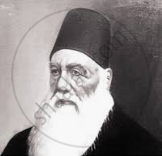
(i) Name the famous Muslim reformer in the picture.
(ii) Name the educational insitution founded by him. What was his objective?
