Advertisements
Advertisements
प्रश्न
The partition of Bengal and the formation of the Muslim League were two important events that had an impact on the national struggle for independence. In this context, explain the following:
Impact of the Swadeshi and Boycott movements as part of the Anti-Partition Movement.
Advertisements
उत्तर
The Boycott and Swadeshi movements had a significant impact on the Anti-Partition Movement in the following ways:
Mass Character of the Movement: The Swadeshi Movement attracted a large number of people belonging to varied sections of Indian society. This was the first time that so many people had participated in a mass movement. Many zamindars who had been loyal to the colonial government earlier joined the movement. The participation of women and students was an essential factor which increased the importance of the movement manifold. Despite British attempts to veer the Muslim community away from the nationalist cause, many Muslim leaders such as Abdul Rasul, Guznavi and Liaquat Hussain joined the movement and mobilised people.
Economic Nationalism: The Swadeshi and Boycott movements were insistent on economic self-reliance, which meant an assertion of self-confidence. It aimed at the promotion of indigenous industries for strengthening the country. This explicit influence on self-reliance gave a much-needed stimulus to the cottage industries and to large-scale enterprises. Many textile mills, soap and match factories, and handloom weaving concerns were founded. This improved the demand for
Swadeshi goods and in turn gave a boost to the production. The establishment of the Tata Iron and Steel Company in the Singhbhum district of Jharkhand began the production of indigenous iron and steel. Because of the Swadeshi spirit, the capital of this company came from Indians. Many joint stock banks were founded by mahajans and zamindars. Acharya P.C. Ray set up the Bengal Chemical Swadeshi Stores. Rabindranath Tagore also helped in opening a Swadeshi store.
Cultural Impact: As a result of the Swadeshi and Boycott movements, there was a spurt of nationalist poetry, prose and journalism. Many famous patriotic songs were written by nationalist poets like Rabindranath Tagore, Rajani Kant Sen, Syed Abu Mohammed and Mukunda Das. Many classic articles on freedom, liberty and self-reliance were produced in the press. Aurobindo Ghose fostered nationalist feelings through his writings. Bankimchandra’s novel Anandmath though written earlier, was much in demand because of the song ‘Bande Mataram’. It was seen as a war cry of the nationalists. Journals and newspapers such as Kesari, Mahratta and Yugantar furthered the cause of the movement.
APPEARS IN
संबंधित प्रश्न
When was the All India Muslim League formed?
Who presided over the first session of muslim league at Dacca?
Who established the Mohammedan Anglo-Oriental College at Aligarh?
Name the Viceroy who was responsible in 1909, for granting separate electorates on the basis of communal representation.
Why did Sir Syed Ahmed Khan advise the Muslims not to join the Congress?
Why did the Muslims find the partition of Bengal suited their interests.
Discuss the role of Sir Syed Ahmed Khan in the formation of Muslims League.
Explain the circumstances leading to the formation of Minto-Morley Reforms.
The formation of the Muslim League and the Home Rule Movement had a wholesome effect on the affairs of the country. In this context mention three factors leading to the formation of the Muslim League.
Answer the following:
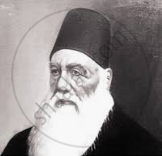
(i) Name the famous Muslim reformer in the picture.
(ii) Name the educational insitution founded by him. What was his objective?
