Advertisements
Advertisements
प्रश्न
Give scientific reason.
The new individual produced by sexual reproduction always has the recombined genes of both the parents.
Advertisements
उत्तर
- Sexual reproduction involves two parents i.e. male parent and female parent.
- The male gamete coming from a male parent fuses with a female gamete of a female parent to form a zygote which develops into an embryo and then into a new individual.
Thus, the new individual always has the recombined genes of both the parents.
संबंधित प्रश्न
State whether the following statement is true (T) or false (F):
The plumule of an embryo gives rise to the root system.
Mention the function of Seeds.
Name the following:
Organ producing sperms.
Name the following:
Virgin birth
Complete the following statement by choosing the correct alternative:
Fertilization occurs in ______.
Define the following:
Spermatogenesis
The figure given below represents the female reproductive system of a mammal.
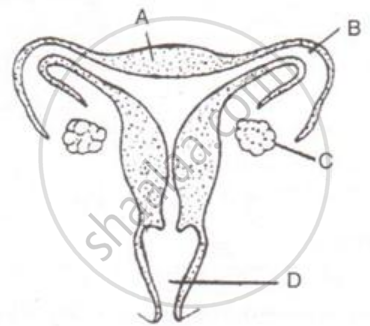
What will happen if the part B on both sides gets blocked?
Name two essential structures which take part in fertilization.
Give Reasons
The urethra is also called urinogenital duct.
Study the diagram given below and then answer the questions that follow:
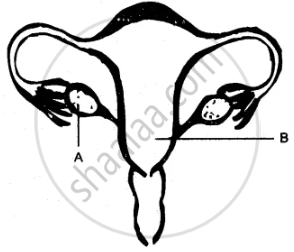
(i) Name the part labeled A. Name any two hormones produced by the part labeled A.
(ii) What happens to the part labeled B.
(1) if fertilization takes place?
(2) If fertilization does not take place?
(iii) Where does fertilization occur?
(iv) Draw a neat diagram of the human sperm as seen under high magnification and label the following parts.
(1) Acrosome
(2) Mitochondria
Draw a labeled diagram of sperm.
Explain the Term Vas deferens.
Give Technical Term:
A method of contraception in which the sperm duct is cut and ligated.
Multiple Choice Question:
Fertilization means:
Answer the following question.
What is capacitation? Give its importance.
Describe the process of fertilization.
How can plants and animals save themselves from extinction?
State whether True or False:
The chromosome number in germ cells producing the gametes are diploid.
What is the meiotic stage of the ovum at the time of ovulation?
