Advertisements
Advertisements
प्रश्न
Define the following term:
Parasitism
Advertisements
उत्तर
Parasitism is generally defined as a relationship between the two living species in which one organism is benefitted at the expense of the other. The organism that is benefitted is called the parasite, while the one that is harmed is called the host.
APPEARS IN
संबंधित प्रश्न
During .............. typs of interaction, both organisms are benefited
- mutualism
- competition
- commensalism
- parasitism
What is mutualism?
An orchid plant is growing on the branch of a mango tree. How do you describe this interaction between the orchid and the mango tree?
Select the statement which explains the best parasitism.
Give one example of interspecific competition.
Name the type of association:
Clownfish and sea anemone
Name the type of association: Hummingbirds and host flowering plants
What is the ecological process behind the biological control method of managing pest insects?
Give one example of mutualism.
Define Niche.
Define mutualism.
Explain different population interactions with examples.
Define population growth. Explain different types of age pyramids.
Two species competing for the same resources, avoid competition by choosing different times for feeding, also known as ______
Mutualism can be represented as the interaction between ____________.
______ is the adaptation of an organism i which it matches its colour with its surroundings to get protected from predators.
Identify the interspecific interaction which one species is benefited and other is neither banned nor benefited.
Select the CORRECT match:
| I | II | ||
| i. | Competition | a. | Lichen |
| ii. | Commensalism | b. | Sea anemone and clownfish |
| iii. | Mutualism | c. | Lions and Leopards |
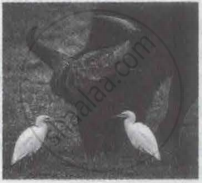
In the given picture, identify the type of interspecific interaction.
Which one of the following is NOT an example of mutualism?
A protozoan living in the digestive tract of a flea that lives on a dog is an example of ______
Substantiate by giving two reasons as to why a holistic understanding of the flora and fauna the cropland is required before introducing an appropriate biocontrol method.
With the decline in the population of fig species it was noticed that the population of wasp species also started to decline. What is the relationship between the two and what could be the possible reason for decline of wasps?
Mycorrhizae are the example of ______.
______ in birds is an interesting example of parasitism in which the parasitic bird lays its eggs in the nest of its host and the host incubates them.
Which type of interaction is represented by the given figure?
In spite of interspecific competition in nature, which mechanism the competing species might have evolved for their survival?
What is homeostasis?
What are the organisms that feed on plant sap and other plant parts called?
In a pond, we see plants which are free-floating; rooted–submerged; rooted emergent; rooted with floating leaves; Write the type of plant against the following examples.
| Plant Name | Type | |
| a. | Hydrilla | ______ |
| b. | Typha | ______ |
| c. | Nymphaea | ______ |
| d. | Lemna | ______ |
| e. | Vallisneria | ______ |
Lianas are vascular plants rooted in the ground and maintain erectness of their stem by making use of other trees for support. They do not maintain direct relation with those trees. Discuss the type of association the lianas have with the trees.
Give one example for the following type.
Chemical defense agent
Fill in the blanks
| Species A | Species B | Type of Interaction | Example |
| + | - | ______ | ______ |
| + | + | ______ | ______ |
| + | 0 | Commensalism | ______ |
Between which among the following, the relationship is not an example of
?
Complete the following chart regarding population interaction and re-write:
| Sr. No. | Name of interaction | Interaction between |
| 1. | ? | Plasmodium and Man |
| 2. | ? | Leopard and Lion |
| 3. | ? | Clownfish and Sea-anemone |
Observe the graph given below.
|
The graph represents inter-specific interaction between two species of Paramecia competing for the same resource in a culture medium. Paramecium caudatum and Paramecium aurelia were grown in separate cultures as well as in mixed cultures. It was found that each species grew in numbers according to the logistic equation.
|

a) Which species is competitively superior? Support it with the data provided in the graph.
b) State the underlying principle for the above result and name the scientist associated with this principle.
c) Explain the mechanism in which two or more species competing with each other can co-exist.
OR
Graphs A and B shown below depict interaction of two species. Which graph indicates Mutualism? Give reason.
 |
 |
| A | B |
In which interaction of species, both the species are at a loss?
Mention the scientific name of protozoan parasite that causes Amoebiasis.
Give one example of parasitism.
