Advertisements
Advertisements
प्रश्न
Distinguish between a sigma and a pi bond.
Advertisements
उत्तर
The following are the differences between sigma and pi-bonds:
| Sigma (σ) Bond | Pi (π) Bond |
| It is formed by the end to end overlap of orbitals | It is formed by the lateral overlap of orbitals. |
| The orbitals involved in the overlapping are s-s, s-p, or p-p | These bonds are formed by the overlap of p–p orbitals only |
| It is a strong bond. | It is weak bond. |
| The electron cloud is symmetrical about the line joining the two nuclei. | The electron cloud is not symmetrical. |
| It consists of one electron cloud, which is symmetrical about the internuclear axis. | There are two electron clouds lying above and below the plane of the atomic nuclei. |
| Free rotation about σ bonds is possible. | Rotation is restricted in case of pi-bonds. |
APPEARS IN
संबंधित प्रश्न
Apart from tetrahedral geometry, another possible geometry for CH4 is square planar with the four H atoms at the corners of the square and the C atom at its centre. Explain why CH4 is not square planar?
Draw a diagram showing the formation of a double bond and a triple bond between carbon atoms in C2H4 and C2H2 molecules.
What is the total number of sigma and pi bonds in the following molecules?
C2H2
What do you understand by bond pairs and lone pairs of electrons? Illustrate by giving one example of each type.
What is the total number of sigma and pi bonds in the following molecules?
C2H4
Isostructural species are those which have the same shape and hybridisation. Among the given species identify the isostructural pairs.
The types of hybrid orbitals of nitrogen in \[\ce{NO^{+}2}\] , \[\ce{NO^{-}3}\] and \[\ce{NH^{+}4}\] respectively are expected to be ______.
Which of the following angle corresponds to sp2 hybridisation?
Match the species in Column I with the type of hybrid orbitals in Column II.
| Column I | Column II |
| (i) \[\ce{SF4}\] | (a) sp3d2 |
| (ii) \[\ce{IF5}\] | (b) d2sp3 |
| (iii) \[\ce{NO^{+}2}\], | (c) sp3d |
| (iv) \[\ce{NH^{+}4}\], | (d) sp3 |
| (e) sp |
Match the shape of molecules in Column I with the type of hybridisation in Column II.
| Column I | Column II |
| (i) Tetrahedral | (a) sp2 |
| (ii) Trigonal | (b) sp |
| (iii) Linear | (c) sp3 |
Discuss the concept of hybridisation. What are its different types in a carbon atom.
What is the type of hybridisation of carbon atoms marked with star.
\[\begin{array}{cc}
\phantom{.....}\ce{O}\\
\phantom{.....}||\\
\ce{\overset{∗}{C}H2 = CH - \overset{∗}{C} - O - H}
\end{array}\]
What is the type of hybridisation of carbon atoms marked with star.
\[\ce{CH3 - \overset{∗}{C}H2 - OH}\]
What is the type of hybridisation of carbon atoms marked with star.
\[\begin{array}{cc}
\phantom{..........}\ce{O}\\
\phantom{..........}||\\
\ce{CH3 - CH2 - \overset{∗}{C} - H}
\end{array}\]
What is the type of hybridisation of carbon atoms marked with star.
\[\ce{\overset{∗}{C}H3 - CH = CH - CH3}\]
What is the type of hybridisation of carbon atoms marked with star.
\[\ce{CH3 - \overset{∗}{C} ≡ CH}\]
BF3 is a planar and electron-deficient compound. Hybridization and the number of electrons around the central atom, respectively are ______.
In the given reaction,
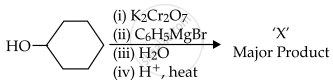
the number of sp2 hybridised carbon (s) in compound 'X' is ______.
