Advertisements
Advertisements
प्रश्न
Construct an equilateral triangle with each side 6 cm. In the triangle drawn, draw all the possible lines of symmetry.
Advertisements
उत्तर
Steps of Construction:
(i) Draw a line segment BC = 6 cm

(ii) With centres B and C and radius 6 cm, draw two arcs intersecting each other at A.
(iii) Join AB and AC
∆ ABC is the required equilateral triangle,
(iv) Draw the angle bisectors of ∠A, ∠B, and ∠C.
These are the lines of symmetry which are three in numbers as the triangle is equilateral.
APPEARS IN
संबंधित प्रश्न
In the figure given below, draw the line (s) of symmetry, if possible:
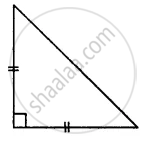
Draw a triangle with only one line of symmetry. In case, if possible, represent the line/ lines of symmetry by dotted lines. Also, write the special name of the triangle drawn.
Draw a quadrilateral with no line of symmetry. In case, if possible, represent the line/ lines of symmetry by dotted lines. Also, write the special name of the quadrilateral drawn.
Draw a quadrilateral with exactly two lines of symmetry. In case, if possible, represent the line/ lines of symmetry by dotted lines. Also, write the special name of the quadrilateral drawn.
In each of the figure below, state the number of axes of symmetry, if any.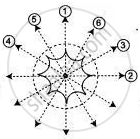
In each of the figure below, an additional line is indicated by dots. Observe, name the figure and state if the figure is symmetrical about the dotted line.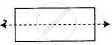
Draw the mirror image:
Which of these English words reads the same on half a turn?
ZOOM, MOW, SWIMS, SIS, NOON
For the given figure, which one is the mirror line, l1 or l2?
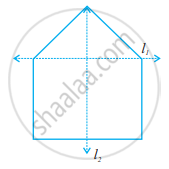
Draw all lines of symmetry for the following figure as given below:

