Advertisements
Advertisements
प्रश्न
Choose the correct option.
In human beings, uric acid is formed due to metabolism of ______.
विकल्प
amino acids
fatty acids
creatinine
nucleic acids
Advertisements
उत्तर
In human beings, uric acid is formed due to the metabolism of nucleic acids.
APPEARS IN
संबंधित प्रश्न
Explain the principle of dialysis with the help of a labelled diagram.
The excretory unit in the human excretory system is called ______.
The procedure of cleaning the blood of a person by using a kidney machine is known as ______.
Given below is a set of five terms. Rewrite the terms in their correct order so as to be in logical sequence.
Afferent arteriole, renal vein, secondary capillary network, glomerulus, efferent arteriole.
Differentiate between:
Ureter and Urethra.
Name the Following
The blood vessels which brings pure blood to the kidneys:
Name the Following
The substance found in excess in the urine of a diabetic patient.
Answer the following question.
Why do we get bad breath after eating garlic or raw onion?
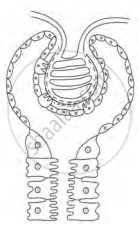
Complete the diagram/chart with correct labels/ information. Write the conceptual details regarding it.
Osmoregulation maintains the osmolarity of blood at about ______.
