Advertisements
Advertisements
प्रश्न
Arrange the following.
In decreasing order of basic strength in gas phase (C2H5)NH2, (C2H5)NH, (C2H5)3N and NH3.
Advertisements
उत्तर
In the gas phase, solvent effects i.e., stabilization of the conjugate acids due to H-bonding, are absent. Therefore, in the gas phase, basic strength mainly depends upon the +I effect of the alkyl groups. Since the +I effect increases with the number of alkyl groups, therefore the basic strength of the amines decreases as the number of ethyl groups decreases from three in (C2H5)3N to two in (C2H5)2NH to one in C2H5NH2 and zero in NH3.
Basic strength in the gas phase decreases in the order is, (C2H5)3N > (C2H5)NH2 > (C2H5)NH > NH3.
APPEARS IN
संबंधित प्रश्न
Choose the most correct option.
The hybridisation of nitrogen in primary amine is ____________.
Which of the following amines is most basic in nature in aqueous phase?
When aniline reacts with acetic anhydride the product formed is ____________.
IUPAC name for the amine is:
\[\begin{array}{cc}
\phantom{.}\ce{CH3}\\
|\phantom{..}\\
\ce{CH3 - N - C - CH2 - CH3}\\
\phantom{.}|\phantom{.....}|\phantom{........}\\
\phantom{}\ce{CH3}\phantom{..}\ce{C2H5}\phantom{....}
\end{array}\]
Write a short note on the following.
Schotten-Baumann reaction
(C2H5)2CHNH2. The following amine can be classified as:
Arrange the following in the increasing order of their basic strength:
C2H5NH2, C6H5NH2, (C2H5)2NH
Complete the following reaction.
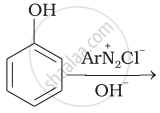
Write short notes on the following
Ammonolysis
Write short note on Ammonolysis.
