Advertisements
Advertisements
प्रश्न
Arrange the following as per the instruction given in the bracket.
Mg, Cl, Na, S, Si (increasing order of atomic size)
Advertisements
उत्तर
Mg, Cl, Na, S, Si (increasing order of atomic size) -
Cl < S < Si < Mg < Na
99 pm < 104 pm < 117 pm < 160 pm < 186 pm
APPEARS IN
संबंधित प्रश्न
Answer the following in respect of element `31/15 P `
Is it a reducing agent or oxidizing agent?
Why is the size of sodium is greater than magnesium?
With reference to the variation of properties in the Periodic Table, which of the following is generally true?
Atomic size increases from left to right across a period.
The metals of Group 2 from top to bottom are Be, Mg, Ca, Sr and Ba. Which one of these elements will form ions most readily and why?
Right or wrong sentence.
Moving from left to right, the size of the atom decreases.
Right or wrong sentence.
The size of an atom depends on the number of valence electrons.
Which of the following gives the correct increasing order of the atomic radii of O, F, and N?
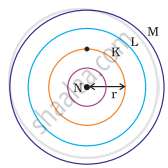
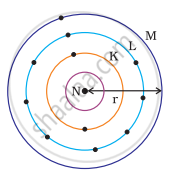
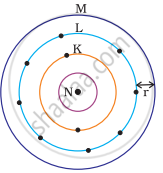
Which one of the following depict the correct representation of atomic radius(r) of an atom?
|
(i) |
(ii) |
|
(iii) |
(iv) |

Atomic number of a few elements are given below
10, 20, 7, 14
- Identify the elements
- Identify the Group number of these elements in the Periodic Table
- Identify the Periods of these elements in the Periodic Table
- What would be the electronic configuration for each of these elements?
- Determine the valency of these elements
Arrange the following in order of increasing radii:
Mg2+, Mg, Mg+
Explain your choice.
