Advertisements
Advertisements
प्रश्न
Answer the following.
What is a Class I lever?
Advertisements
उत्तर
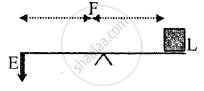
In Class I levers (also called levers of first order), the fulcrum lies between the load and the effort, i.e., the load and the effort are on the opposite sides of the fulcrum.
Examples: See-saw, pairs of scissors, pliers, beam balance, etc.
The mechanical advantage of a Class I lever is always greater than one. These levers act as force multipliers.
APPEARS IN
संबंधित प्रश्न
Give one example of a class I lever in a case where the mechanical advantage is less than 1?
Name the class to which the following lever belong:
A pair of scissors
Name the class to which the following lever belong:
a nutcracker
Draw diagram to illustrate the position of fulcrum, load, and effort, of the following:
a pair of forceps
In a lever, the fulcrum is at one end at a distance of 30 cm from the load and effort is at the other end at a distance of 90 cm from the load. Find :
(a) the length of load arm,
(b) the length of effort arm, and
(c) the mechanical advantage of the lever.
Which type of lever has a mechanical advantage always more than one? Give one example. What change can be made in this lever to increase its mechanical advantage?
Draw a labelled diagram of a class II lever. Give one example of such a lever.
Explain why the mechanical advantage of the class III type of lever is always less than 1.
Lemon juicer belongs to which type of lever? Why?
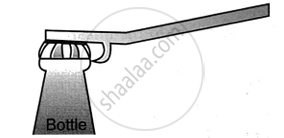
Name the class of the lever shown in the picture below: