Advertisements
Advertisements
प्रश्न
Answer the following.
State the principle of levers.
Advertisements
उत्तर
The principle of a lever states that the product of the load and the load arm is always equal to the product of the effort and the effort arm.
Load x Load arm = Effort x Effort arm Load Effort arm
`"Load "/ "Effort"`= `"Effort arm"/"Load arm"`
The above ratio is called the mechanical advantage of a lever.
संबंधित प्रश्न
What do you mean by the mechanical advantage of a lever?
Which class of lever has the mechanical advantage always more than 1? Give an example.
Name the class to which the following lever belong:
A pair of scissors
Name the class to which the following lever belong:
a lemon squeezer
Name the class to which the following lever belong:
a beam balance
Name the class to which the following lever belong:
a see-saw
Name the class to which the following levers belong:
a pair of pliers
Name the class to which the following lever belong:
a crowbar
The diagram given below shows the three kinds of levers. Name the class of lever and give one example of the class.
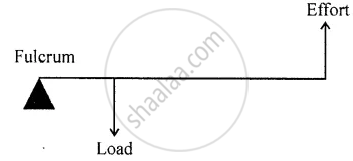
Draw diagram to illustrate the position of fulcrum, load, and effort, of the following:
a nutcracker
Draw diagram to illustrate the position of fulcrum, load, and effort, of the following:
a pair of forceps
A lever of length 100 cm has the effort of 15 kgf at a distance of 40 cm from the fulcrum at one end. What load can be applied at its other end?
In a lever, the fulcrum is at one end at a distance of 30 cm from the load and effort is at the other end at a distance of 90 cm from the load. Find :
(a) the length of load arm,
(b) the length of effort arm, and
(c) the mechanical advantage of the lever.
Tick the most appropriate answer.
Which of the following is a Class II lever?
Tick the most appropriate answer.
A pair of scissors is an example of a/an
Answer the following in a word or two or in a sentence.
Give one example of a machine used to multiply speed.
Name the three classes of levers and state how are they distinguished. Give two examples of each class.
Classify the following into levers:
A catapult
Classify the following into levers:
A fishing rod
Name the load, effort, and fulcrum.
 |
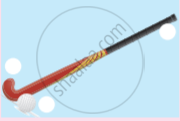 |
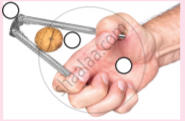 |
|
1. ______ 2. ______ 3. ______ |
1. ______ 2. ______ 3. ______ |
1. ______ 2. ______ 3. ______ |
