Topics
Introduction to Indian Society
- Study of Indian Society: Sociological Connections with History and Anthropology
- Study of Indian Society
- Religious Beliefs and Practices in Ancient India
- Religion in Ancient Indian Civilizations
- Jainism and Buddhism in Ancient India
- Religious Beliefs and Practices in Medieval India
- Status of Women in Indian Society
- Nature of Education in Ancient and Medieval India
- Social Life in Ancient and Medieval India
- Urbanisation in Ancient India
- Concept of Sociological Imagination
- Colonial Period in India
- Effects of Colonialisation in India
- Factors Affecting Post-Independence India
- Overview of Introduction to Indian Society
Segments of Indian Society
- Introduction to Segments of Indian Society
- The Tribal Community in India
- Tribal Development in India
- Exploitation and Problems of the Indian Tribal Community
- The Rural Community in India
- Rural Development in India (Sociological Perspective)
- The Urban Community in India
- Urban Development in India
- Overview of Segments of Indian Society
Diversity and Unity in Indian Society
- Introduction of Diversity and Unity in Indian Society
- Diversity in Indian Society
- Unity in Diversity
- Challenges to National Unity
- Factors that Are Responsible for Economic Inequality in Society
- Overview of Diversity and Unity in Indian Society
Processes of Social Change in India
- Industrialisation
- Urbanisation in India
- Modernisation
- Digitalisation
- Factors Responsible for Social Change
- Overview of Processes of Social Change in India
Social Movements in India
- Meaning and Nature of Social Movement
- Types of Social Movements
- Causes of Social Movements
- Social Movements and Social Change
- Womens’ Movement in India
- Workers’ Movements
- Farmer's Movements
- Environmental Movement in India
- Overview of Social Movements in India
Social Problems in India
- Social Problem
- Ageing
- The Problems of Ageing
- Measures to Tackle the Problems of Ageing
- Concept of Unemployment
- Causes of Unemployment
- General Measures to Reduce Unemployment
- Farmers’ Suicide
- Causes of Farmers’ Suicide
- Consequences of Farmers’ Suicides
- Measures to Tackle the Problem of Farmer Suicides
- Domestic Violence
- Causes of Domestic Violence
- Consequences of Domestic Violence
- Measures to Deal with Domestic Violence
- Addiction (Substance, Internet, Mobile)
- Types of Addiction
- Causes of Addiction
- Consequences of Addiction
- Measures to Tackle Addiction Problems
- Overview of Social Problems in India
Passages
- Passages
- Definition: Urbanisation
- Phases of Urbanisation in Ancient India
- Definition: First Urbanisation
- Overview of the First Urbanisation
- Definition: Second Urbanisation
- Causes of the Second Urbanisation
- Key Takeaways
Definition : Urbanisation
Urbanisation is when more and more people move from villages to towns and cities, leading to the growth and expansion of urban areas where people live and work together in non-farming jobs.
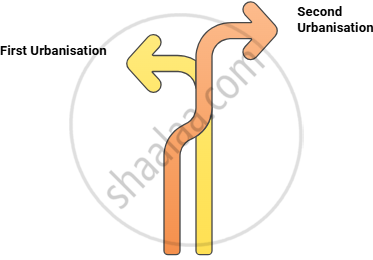
Phases of Urbanisation in Ancient India
Definition : First Urbanisation
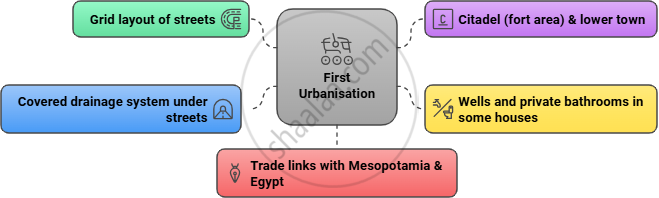
First urbanisation in ancient India refers to the development of well-planned cities like Harappa and Mohenjo-daro during the Indus Valley Civilization, where people lived together with advanced facilities like grid streets and drainage systems.
Overview of the First Urbanisation
- Major cities: Harappa, Mohenjo-daro, Dholavira
- Features
- Modern cities like Chandigarh employ planned grid layouts inspired by ancient models.
Definition : Second Urbanisation
Second urbanisation means the rise of new towns along the Ganga plains around 600 BCE, brought about by farming, trade, and the use of coins, leading to bigger kingdoms called Mahajanapadas.
Causes of the Second Urbanisation
| Cause | Explanation |
|---|---|
| Migration and settlement of Indo-Aryans |
The Indo-Aryans
|
| Agricultural expansion |
Forests were cleared and farmlands expanded, creating food surpluses that could support town populations. |
| Technological advances |
|
| Emergence of Janapadas and Mahajanapadas |
|
| Growth of trade and artisan guilds |
|
| Increasing importance of kings |
Kings
|
| Religious and cultural developments | New religions (Buddhism and Jainism) and cultural shifts attracted people to new urban centers, making cities hubs of learning and spirituality. |
Key Takeaways
-
Urbanisation means the growth of towns and cities, mainly supported by non-farming jobs and better facilities.
-
The First Urbanisation happened during the Indus Valley Civilization, with cities like Harappa and Mohenjo-daro showing grid-planned streets, advanced drainage, and trade with other ancient cultures.
-
The Second Urbanisation started around 600 BCE in the Gangetic plains, sparked by Indo-Aryan migration, agricultural expansion, iron tool use, coinage, and the rise of new kingdoms (Mahajanapadas).
-
Ancient urban features like guilds, grid layouts, and drainage systems still inspire modern Indian city planning.
