Topics
Introduction to Indian Society
- Study of Indian Society: Sociological Connections with History and Anthropology
- Study of Indian Society
- Religious Beliefs and Practices in Ancient India
- Religion in Ancient Indian Civilizations
- Jainism and Buddhism in Ancient India
- Religious Beliefs and Practices in Medieval India
- Status of Women in Indian Society
- Nature of Education in Ancient and Medieval India
- Social Life in Ancient and Medieval India
- Urbanisation in Ancient India
- Concept of Sociological Imagination
- Colonial Period in India
- Effects of Colonialisation in India
- Factors Affecting Post-Independence India
- Overview of Introduction to Indian Society
Segments of Indian Society
- Introduction to Segments of Indian Society
- The Tribal Community in India
- Tribal Development in India
- Exploitation and Problems of the Indian Tribal Community
- The Rural Community in India
- Rural Development in India (Sociological Perspective)
- The Urban Community in India
- Urban Development in India
- Overview of Segments of Indian Society
Diversity and Unity in Indian Society
- Introduction of Diversity and Unity in Indian Society
- Diversity in Indian Society
- Unity in Diversity
- Challenges to National Unity
- Factors that Are Responsible for Economic Inequality in Society
- Overview of Diversity and Unity in Indian Society
Processes of Social Change in India
- Industrialisation
- Urbanisation in India
- Modernisation
- Digitalisation
- Factors Responsible for Social Change
- Overview of Processes of Social Change in India
Social Movements in India
- Meaning and Nature of Social Movement
- Types of Social Movements
- Causes of Social Movements
- Social Movements and Social Change
- Womens’ Movement in India
- Workers’ Movements
- Farmer's Movements
- Environmental Movement in India
- Overview of Social Movements in India
Social Problems in India
- Social Problem
- Ageing
- The Problems of Ageing
- Measures to Tackle the Problems of Ageing
- Concept of Unemployment
- Causes of Unemployment
- General Measures to Reduce Unemployment
- Farmers’ Suicide
- Causes of Farmers’ Suicide
- Consequences of Farmers’ Suicides
- Measures to Tackle the Problem of Farmer Suicides
- Domestic Violence
- Causes of Domestic Violence
- Consequences of Domestic Violence
- Measures to Deal with Domestic Violence
- Addiction (Substance, Internet, Mobile)
- Types of Addiction
- Causes of Addiction
- Consequences of Addiction
- Measures to Tackle Addiction Problems
- Overview of Social Problems in India
Passages
- Passages
- Jainism in Ancient India: Teachings and Teachers
- The Sola Satis in Jainism
- Religious Beliefs in Buddhism
- The Four Noble Truths in Buddhism
- The Eightfold Path in Buddhism
- The Jataka Tales in Buddhism
- Key Takeaways
Jainism in Ancient India : Teachings and Teachers
1. Tirthankaras in Jainism
In Jainism, Tirthankaras are 24 enlightened teachers or spiritual leaders, the “ford-makers”, who show the path across the cycle of birth and death (samsara) to reach liberation (moksha)
- The first Tirthankara was Rishabhanatha
- The last Tirthankara was Mahavira (6th century BCE).
2. Jain Teachings – Ahimsa, Tapas, Nirvana
-
Ahimsa (Non-violence): The central principle of Jainism; every living being must be respected, and no harm (even to insects) should be caused by thought, word, or deed.
-
Tapas (Penance): The practice of self-discipline and renunciation to purify the soul and remove karmic impurities.
-
Nirvana (Liberation): The final goal where the soul becomes free from the cycle of rebirth and attains pure knowledge and bliss.
The Sola Satis in Jainism
The Sola Sati, meaning “sixteen virtuous women”, are revered female ideals of faith and purity in Jainism; notably, five of them—Draupadi, Kausalya, Sita, Kunti, and Damayanti—are also honoured in Hindu traditions for their devotion and virtue.
| No. | Name | Brief Description |
|---|---|---|
| 1 | Brahmi | First Jain nun and daughter of Rishabhanatha, known for wisdom and leadership |
| 2 | Sundari | Sister of Brahmi, famous for devotion and spiritual guidance |
| 3 | Chandanbala | Most revered female disciple of Mahavira, known for patience and forgiveness |
| 4 | Rajimati | Renounced worldly life, attained enlightenment; wife of Neminatha |
| 5 | Draupadi | Maintained virtue through trials, also in Hindu Mahabharata |
| 6 | Kaushalya | Known for devotion and compassion; also mother of Lord Rama in Hindu tradition |
| 7 | Mrigavati | A model of endurance and mercy, forgave betrayal and cruelty |
| 8 | Sulasa | Famous laywoman for steadfast faith through hardships |
| 9 | Sita | Famous for purity and strength, also in Hindu Ramayana |
| 10 | Subhadra | Upheld Jain virtues even after marrying outside her faith |
| 11 | Shiva | Renounced wealth for spiritual path, devotion to Jain teaching |
| 12 | Kunti | Known for her motherly virtues and perseverance, Mahabharata figure |
| 13 | Damayanti | Symbol of loyalty, wisdom, and virtuous living; also present in Hindu stories |
| 14 | Puspachula | Remembered for thorough practice of Jain teachings and compassion |
| 15 | Prabhavati | Symbolized faithfulness and humility |
| 16 | Padmavati | Noted for purity and piety in Jain tradition |
Religious Beliefs in Buddhism
Buddhism, taught by Buddha, offered the Middle Path to end suffering through the Four Noble Truths and Eightfold Path, emphasised moral living and meditation over rituals, and did not focus on worship of gods, welcoming all people to join the Sangha (community).
The Four Noble Truths in Buddhism

The Eight Fold Path in Buddhism
| Aspect | What It Means |
|---|---|
| Right View | Understand the Four Noble Truths and reality as it really is |
| Right Intention | Cultivate good motives and intentions |
| Right Speech | Speak truthfully; avoid lies and harmful talk |
| Right Action | Behave ethically; do not harm living beings, steal, or act immorally |
| Right Livelihood | Choose honest and non-harmful work |
| Right Effort | Work to improve yourself and avoid negative thoughts |
| Right Mindfulness | Be aware of your body, mind, and surroundings |
| Right Concentration | Practice focused meditation and deep mental clarity |
The Jataka Tales in Buddhism
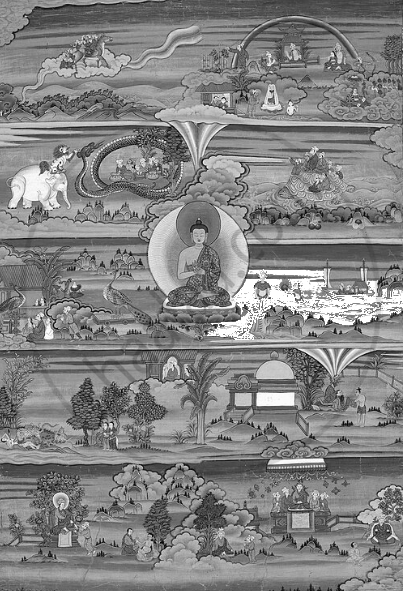
- The Jataka Tales are a famous collection of stories from Buddhism that describe the previous lives of the Buddha, where he was sometimes born as a human and sometimes as an animal
- In each story he shows a virtue—like kindness, honesty, or self-sacrifice—to teach moral lessons and inspire people to do good deeds.
- These tales are among the oldest Buddhist literature and are still told and illustrated in Buddhist art and texts to teach values in an easy-to-understand way
Related concepts
- Religious Beliefs and Practices in Ancient India - Period of Religious Flux
- Religious Beliefs and Practices in Ancient India - Christianity
