Topics
Plant Life
Unit 1 : Plant Life
The Leaf
The Leaf
- Root
- Types of Root
- Shoot System
- Stem
- The Structure of a Plant
- Types of Leaf
- Autotrophic Plants
- Insectivorous Plants
- Significance of Photosynthesis
- Modifications of Leaf
The Flower
Unit 2: The Cell
The Flower
The Cell
Unit 3: Human Body
Human Body
Cell - The Structure And Functions
Digestive System
- Food and Its Types
- Nutrients and Nutrition
- Component of Food
- Human Digestive System
- The Teeth and Its Structure
- The Salivary Glands
- The Food Pipe/Oesophagus
- The Stomach
- The Small Intestine
- Absorption of Food
- The Large Intestine
- Assimilation of Food
- The Aching Tooth
- Oral Health
Respiratory System
- Parts of Respiration
Circulatory System
Unit 4 : Health and Hygiene
Health and Hygiene
Digestive System
Respiratory System
Habitat and Adaptation
- Habitat
- Adaptations of Plants
- Adaptation in Aquatic Plants (Hydrophytes)
- Adaptation in Desert Plants (Xerophytes)
- Adaptation in plants of snowy regions
- Adaptations in Seeds for Transport Through Air
- Adaptation in Animals
- Adaptation in Aquatic Animals
- Adaptation in Desert Animals
- Adaptation in Mountain Animal
- Adaptation in Aerial Animals
Unit 5: Adaptation
The Circulatory System
Disease and Hygiene
Habitat and Adaptation
- Introduction
- Experiment
Introduction
The root is the part of the plant that grows below the soil and helps anchor the plant in the ground. When a seed starts to grow, two important parts appear:
- Radicle: This is the part that grows downward into the soil, forming the root.
- Plumule: This is the part that grows upward and forms the shoot, or stem.
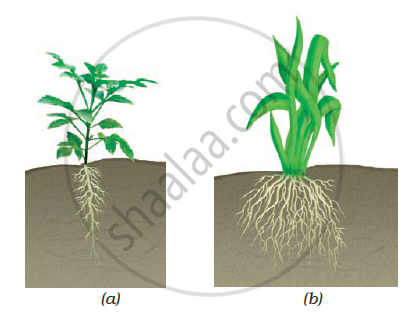
The taproot is the main root that forms from the radicle and grows deep into the soil. From this main root, smaller secondary roots spread out in all directions, helping the plant stay firmly rooted in the ground.
Near the tip of the root, there are tiny, hair-like structures called root hairs. These root hairs help the plant absorb water and nutrients from the soil. The very tip of the root is delicate and keeps growing, so it has a root cap that protects it from injury as it pushes through the soil.
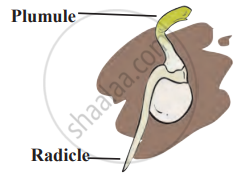
Formation of root
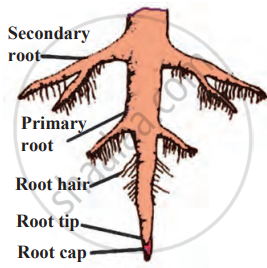
Taproot
Experiment
1. Aim: To observe and understand the process of germination in seeds.
2. Requirements: Conical flask, crumpled paper, water (to moisten the paper), and moth beans or gram seeds (soaked)
3. Procedure
- Moisten a ball of crumpled paper with water and place it at the bottom of the conical flask.
- Place some soaked moth beans or gram seeds between the moistened paper and the inner wall of the conical flask.
- Keep the flask in a warm place, ensuring the paper remains moist but not too wet.
- Observe the seeds daily for 2-3 days, noting any changes.
4. Observation: After 2-3 days, you will notice the seeds begin to sprout. Roots and shoots will emerge from the seeds.
5. Conclusion: The experiment demonstrates the germination process, where soaked seeds begin to grow when provided with moisture and warmth. The seeds sprout, forming roots and shoots, showing how plants begin their life cycle.