Advertisements
Advertisements
How were the debates with religious scholars important in the formation of Akbar’s ideas on governance?
Concept: undefined >> undefined
Very Short Answer Type Question:
With whom did Akbar hold a discussion on religion?
Concept: undefined >> undefined
Advertisements
Very Short Answer Type Question:
When did Mehrunnisa receive the title of Nur Jahan?
Concept: undefined >> undefined
Very Short Answer Type Question:
What power did the nobles exercise during Akbar’s reign?
Concept: undefined >> undefined
Long Answer Type Question:
Write a short note on Akbar’s administrative policies.
Concept: undefined >> undefined
State whether true or false:
Surat was an important trading port on the Bay of Bengal.
Concept: undefined >> undefined
Why did people from distant lands visit Surat?
Concept: undefined >> undefined
Very Short Answer Type Question:
Why has Surat been called the gate to Mecca?
Concept: undefined >> undefined
Short Answer Type Question:
What were the reasons of the decline of Swat?
Concept: undefined >> undefined
What made the city of Masulipatnam populous and prosperous?
Concept: undefined >> undefined
Long Answer Type Question:
Describe Swat as a gateway to the West
Concept: undefined >> undefined
What were the major beliefs and practices of the Sufis?
Concept: undefined >> undefined
very Short Answer Type Question:
Who were Sufis?
Concept: undefined >> undefined
very Short Answer Type Question:
Name any two great Sufis of Central Asia.
Concept: undefined >> undefined
Short Answer Type Question:
What do you mean by Khanqahs? What purpose did it serve?
Concept: undefined >> undefined
Short Answer Type Question:
Who were the pirs? What was their position in society?
Concept: undefined >> undefined
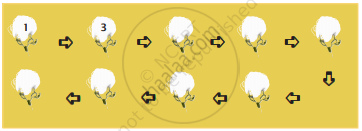
Arrange the statements given below in the correct order and then fill in the numbers in the cotton bolls accordingly. The first two have already been done for you.
1. Swapna sells the cotton to the trader.
2. Customers buy these shirts in a supermarket.
3. Trader sells cotton to the Ginning Mill.
4. Garment exporters buy the cloth from merchants for making shirts.
5. Yarn dealers or merchants give the yarn to the weavers. is.
6. The exporter sells shirts to the businessperson from the USA.
7. Spinning mill buys the cotton and sells yarn to the yarn dealers.
8. Weavers return with the cloth.
9. Ginning mill cleans the cotton and makes it into bales.
Concept: undefined >> undefined
Long Type Question:
How does market work move in favour of the rich and powerful? What are the ways to overcome them?
Concept: undefined >> undefined
How important was the income from land revenue to the stability of the Mughal Empire?
Concept: undefined >> undefined
Like the Mughal Empire, India today is also made up of many social and cultural units. Does this pose a challenge to national integration?
Concept: undefined >> undefined
