English

Science (English Medium) Class 11 - CBSE Question Bank Solutions for Chemistry

Advertisements
Subjects
Topics
Subjects
Popular subjects
Topics
Advertisements
Advertisements
Chemistry
< prev  1081 to 1100 of 1575  next > 

Which of the following ions is more stable? Use resonance to explain your answer.

[8] Organic Chemistry - Some Basic Principles and Techniques
Chapter: [8] Organic Chemistry - Some Basic Principles and Techniques
Concept: undefined >> undefined

The structure of triphenylmethyl cation is given below. This is very stable and some of its salts can be stored for months. Explain the cause of high stability of this cation.

[8] Organic Chemistry - Some Basic Principles and Techniques
Chapter: [8] Organic Chemistry - Some Basic Principles and Techniques
Concept: undefined >> undefined

Advertisements

Draw the resonance structure of the following compounds;
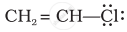
[8] Organic Chemistry - Some Basic Principles and Techniques
Chapter: [8] Organic Chemistry - Some Basic Principles and Techniques
Concept: undefined >> undefined

Draw the resonance structure of the following compounds;

CH2 = CH – CH = CH2

[8] Organic Chemistry - Some Basic Principles and Techniques
Chapter: [8] Organic Chemistry - Some Basic Principles and Techniques
Concept: undefined >> undefined

Draw the resonance structure of the following compounds;

\[\begin{array}{cc}
\ce{CH2 = CH - C = O}\\
\phantom{.........}|\\
\phantom{.........}\ce{H}
\end{array}\]

[8] Organic Chemistry - Some Basic Principles and Techniques
Chapter: [8] Organic Chemistry - Some Basic Principles and Techniques
Concept: undefined >> undefined

Which of the following compounds will not exist as resonance hybrid. Give reason for your answer:

[8] Organic Chemistry - Some Basic Principles and Techniques
Chapter: [8] Organic Chemistry - Some Basic Principles and Techniques
Concept: undefined >> undefined

Resonance structures of propenal are given below. Which of these resonating structures is more stable? Give reason for your answer.

\[\ce{\underset{I}{CH2 = CH - CH = O} <-> \underset{II}{\overset{⊕}{C}H2 - CH = CH - \overset{Θ}{O}}}\]

[8] Organic Chemistry - Some Basic Principles and Techniques
Chapter: [8] Organic Chemistry - Some Basic Principles and Techniques
Concept: undefined >> undefined

Which of the two structures (A) and (B) given below is more stabilised by resonance? Explain.

\[\ce{\underset{(A)}{CH3COOH}}\] and \[\ce{\underset{(B)}{CH3CO\overset{Θ}{O}}}\] 

[8] Organic Chemistry - Some Basic Principles and Techniques
Chapter: [8] Organic Chemistry - Some Basic Principles and Techniques
Concept: undefined >> undefined

Assertion (A): Energy of resonance hybrid is equal to the average of energies of all canonical forms.

Reason (R): Resonance hybrid cannot be presented by a single structure.

[8] Organic Chemistry - Some Basic Principles and Techniques
Chapter: [8] Organic Chemistry - Some Basic Principles and Techniques
Concept: undefined >> undefined

Calculate the atomic mass (average) of chlorine using the following data :-

  % Natural Abundance Molar Mass
35Cl 75.77 34.9689
37Cl 24.23 36.9659
[1] Some Basic Concepts of Chemistry
Chapter: [1] Some Basic Concepts of Chemistry
Concept: undefined >> undefined

Why do elements in the same group have similar physical and chemical properties?

[3] Classification of Elements and Periodicity in Properties
Chapter: [3] Classification of Elements and Periodicity in Properties
Concept: undefined >> undefined

Predict the formula of the stable binary compounds that would be formed by the combination of the following pair of elements.

Lithium and oxygen

[3] Classification of Elements and Periodicity in Properties
Chapter: [3] Classification of Elements and Periodicity in Properties
Concept: undefined >> undefined

Predict the formula of the stable binary compounds that would be formed by the combination of the following pair of elements.

Magnesium and nitrogen

[3] Classification of Elements and Periodicity in Properties
Chapter: [3] Classification of Elements and Periodicity in Properties
Concept: undefined >> undefined

Predict the formula of the stable binary compounds that would be formed by the combination of the following pair of elements.

Aluminium and iodine

[3] Classification of Elements and Periodicity in Properties
Chapter: [3] Classification of Elements and Periodicity in Properties
Concept: undefined >> undefined

Predict the formula of the stable binary compounds that would be formed by the combination of the following pair of elements.

Silicon and oxygen

[3] Classification of Elements and Periodicity in Properties
Chapter: [3] Classification of Elements and Periodicity in Properties
Concept: undefined >> undefined

Predict the formula of the stable binary compounds that would be formed by the combination of the following pair of elements.

Element 71 and fluorine

[3] Classification of Elements and Periodicity in Properties
Chapter: [3] Classification of Elements and Periodicity in Properties
Concept: undefined >> undefined

Predict the formula of the stable binary compounds that would be formed by the combination of the following pair of elements.

Phosphorus and fluorine

[3] Classification of Elements and Periodicity in Properties
Chapter: [3] Classification of Elements and Periodicity in Properties
Concept: undefined >> undefined

Anything that influences the valence electrons will affect the chemistry of the element. Which one of the following factors does not affect the valence shell?

[3] Classification of Elements and Periodicity in Properties
Chapter: [3] Classification of Elements and Periodicity in Properties
Concept: undefined >> undefined

What is the wavelength of light emitted when the electron in a hydrogen atom undergoes a transition from an energy level with n = 4 to an energy level with n = 2?

[2] Structure of Atom
Chapter: [2] Structure of Atom
Concept: undefined >> undefined

Calculate the wave number for the longest wavelength transition in the Balmer series of atomic hydrogen.

[2] Structure of Atom
Chapter: [2] Structure of Atom
Concept: undefined >> undefined
< prev  1081 to 1100 of 1575  next > 
Advertisements
Advertisements
CBSE Science (English Medium) Class 11 Question Bank Solutions
Question Bank Solutions for CBSE Science (English Medium) Class 11 Biology
Question Bank Solutions for CBSE Science (English Medium) Class 11 Chemistry
Question Bank Solutions for CBSE Science (English Medium) Class 11 Computer Science (C++)
Question Bank Solutions for CBSE Science (English Medium) Class 11 Computer Science (Python)
Question Bank Solutions for CBSE Science (English Medium) Class 11 English Core
Question Bank Solutions for CBSE Science (English Medium) Class 11 English Elective - NCERT
Question Bank Solutions for CBSE Science (English Medium) Class 11 Entrepreneurship
Question Bank Solutions for CBSE Science (English Medium) Class 11 Geography
Question Bank Solutions for CBSE Science (English Medium) Class 11 Hindi (Core)
Question Bank Solutions for CBSE Science (English Medium) Class 11 Hindi (Elective)
Question Bank Solutions for CBSE Science (English Medium) Class 11 History
Question Bank Solutions for CBSE Science (English Medium) Class 11 Mathematics
Question Bank Solutions for CBSE Science (English Medium) Class 11 Physics
Question Bank Solutions for CBSE Science (English Medium) Class 11 Political Science
Question Bank Solutions for CBSE Science (English Medium) Class 11 Psychology
Question Bank Solutions for CBSE Science (English Medium) Class 11 Sanskrit (Core)
Question Bank Solutions for CBSE Science (English Medium) Class 11 Sanskrit (Elective)
Question Bank Solutions for CBSE Science (English Medium) Class 11 Sociology
Share
Notifications

Englishहिंदीमराठी


      Forgot password?
Use app×