Advertisements
Advertisements
Question
Why can you feel a pulse when you keep a finger on the wrist or neck but not when you keep them on a vein?
Advertisements
Solution
- Pulse is the series of pressure waves that travel through arteries due to ventricular systole.
- When the heart contracts, it produces pressure that pulls blood out of the heart. This pressure operates as a wave, which corresponds to the pulse you feel. However, this pressure is not consistent.
- When the heart pumps blood out of itself during systole, the arteries are at their maximum pressure. This pressure decreases significantly when it reaches capillaries; therefore, the veins farthest from the heart are under less pressure. Due to the low pressure, veins include valves to prevent blood backflow.
- The pressure in the arteries can be felt whenever the heart beats, particularly in arteries that come to the surface of the body, such as those in the wrist and neck, but not in veins.
- Vein pressure is usually lower than arterial pressure, resulting in a weaker pulse that cannot be detected by touch alone.
- As a result, we may feel a pulse when we place our fingers on the arteries of the wrist or neck but not when we place them on a vein.
APPEARS IN
RELATED QUESTIONS
Fill in the blank with suitable word given below:
The liquid part of coagulated blood is known as____________.
During surgical operations or during accidents, the patient may be given blood from outside to save his life. What is the technical name of this process ? Briefly explain the precautions to be observed and taken in this process.
Name the main artery which carries blood to different parts of the body.
What are seen as greenish blue lines in our hands and legs?
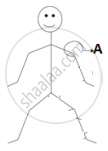
Identify the pulse point ‘A’ from below given diagram.
How a portal vein differs from normal vein?
Why is the velocity of blood flow the lowest in the capillaries?
The pH of the blood is maintained by ____________.
Arteries and veins are connected by a network of extremely narrow tubes called:
______ carry blood to an organ and break up into ______ ending in capillaries.
