Advertisements
Chapters
2: Locating Places on Earth
▶ 3: Movements of the Earth
4: Structure of the Earth
5: Rocks
6: Landforms of the Earth
7: Earthquakes
8: Volcanoes
9: Weathering and Denudation
10: Hydrosphere
11: Composition and Structure of Atmosphere
12: Insolation
13: Atmospheric Pressure and Winds
14: Humidity
15: Pollution-Types and Sources
16: Effects of Pollution
17: Pollution—Preventive Measures
18: Natural Regions of the World
*: Map Based Questions
![Rachna Sapra solutions for जॉग्रफी [इंग्रजी] इयत्ता ९ आईसीएसई chapter 3 - Movements of the Earth - Shaalaa.com](/images/geography-english-class-9-icse_6:e1464ff004d844649e81e9e1e11e08a5.jpg "Rachna Sapra solutions for जॉग्रफी [इंग्रजी] इयत्ता ९ आईसीएसई chapter 3 - Movements of the Earth")
Advertisements
Solutions for Chapter 3: Movements of the Earth
Below listed, you can find solutions for Chapter 3 of CISCE Rachna Sapra for जॉग्रफी [इंग्रजी] इयत्ता ९ आईसीएसई.
Rachna Sapra solutions for जॉग्रफी [इंग्रजी] इयत्ता ९ आईसीएसई 3 Movements of the Earth SOLVE AND SCORE [Pages 29 - 31]
Multiple Choice Questions (MCQs)
Which of the following is a leap year?
1998
2018
2020
2022
On which day spring equinox occurs in the northern hemisphere?
22nd February
22nd March
25th March
23rd April
The days and nights are equal throughout the year at the ______.
Tropic of Cancer
Tropic of Capricorn
Equator
Arctic Circle
The amount and intensity of insolation varies during the day, during the season and during the year.
Choose the factor which is mainly responsible for the above.
Rotation of earth on its axis.
Angle of inclination of sun’s rays.
Length of the day.
All are equally responsible.
Which of the following cities will experience overhead sun twice during the year?
Kochi
Cairo
Jakarta
All of them
The sidereal day is shorter than the solar day by about ______.
4 minutes
2 minutes
3 minutes
5 minutes
Which latitudes best experience the cycle of seasons with respect to the other latitudes?
Tropical zone
Mid-latitudes
Frigid Zone
Equatorial region
Which part of the Earth experiences the moderate temperatures?
Mid-latitudes
Tropical Zone
Equatorial Zone
Frigid zone
What is perihelion?
Position of the Earth farthest to the Sun
Position of the Earth closest to the Sun
Position of the Earth at 45° to the Sun
Position of the Earth at 60° to the Sun
Identify the concept related to the movements of the earth that the given picture shows.
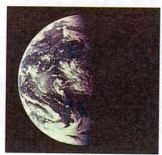
Seasons
Perihelion
Circle of Illumination
Solstice
Which of the following places does not experience the phenomena of the mid-night sun?
Norway
Finland
Greenland
France
When the Tropic of Cancer experiences the longest day, the Tropic of Capricorn experiences?
Normal day
Normal Night
Longest Night
Shortest night
The slanting rays of the Sun are less hot because ______.
The rays don’t come direct from the Sun.
The rays cover more distance to reach the Earth and spread on larger area.
The rays give heat to the Moon on the way.
The rays lose heat, as they pass through clouds.
After 23 September, the length of the day in New Delhi will go on ______ and the length of the day in sydney goes on ______.
increasing, decreasing
decreasing, increasing
no change
no fixed pattern
When the rays of the Sun fall directly on the Tropic of Capricorn, Australia and New Zealand experience the season of ______.
Winter
Spring
Summer
Autumn
Assertion-Reason Based Questions: Four options are given for each question. Choose the correct option for your answer.
Assertion (A): The phenomena of perihelion and aphelion happen during a year.
Reason (R): This is due to the variation in the distance between the earth and the sun within the orbit.
Both A and R are true and R is the correct reason for A.
Both A and R are true but R is not the correct reason for A.
A is true and R is false.
A is false and R is true.
Assertion (A): The duration of day and night is almost equal throughout the year.
Reason (R): Equator lies in the centre of the Earth.
Both A and R are true and R is the correct reason for A.
Both A and R are true but R is not the correct reason for A.
A is true and R is false.
A is false and R is true.
Assertion (A): The length of day and night is six months at the poles.
Reason (R): The axis of the Earth is tilted.
Both A and R are true and R is the correct reason for A.
Both A and R are true but R is not the correct reason for A.
A is true and R is false.
A is false and R is true.
Assertion (A): The temperature decreases with increasing latitudes.
Reason (R): The angle of incidence of sunrays goes on decreasing with increasing latitudes.
Both A and R are true and R is the correct reason for A.
Both A and R are true but R is not the correct reason for A.
A is true and R is false.
A is false and R is true.
Assertion (A): Coriolis effect increases from the equator towards the poles.
Reason (R): The speed of rotation decreases towards the poles.
Both A and R are true and R is the correct reason for A.
Both A and R are true but R is not the correct reason for A.
A is true and R is false.
A is false and R is true.
Source-based Questions:
Read the passage given below and answer the following questions.
| The rotation of the Earth causes day and night. Due to the rotation taking place on the inclined axis, it does affect the phenomena of day and night. The duration of day and night varies according to the latitudes. The days and nights are almost equal at the equator where the inclination of axis is the least. The difference between the length of day and night goes on increasing from the equator towards the poles. The days become progressively longer and the nights become shorter in summers and vice versa in winters. This is due to the fact that the inclination of axis goes on increasing from the equator towards the poles. Had the axis been vertical, the length of days and the nights would have been equal all over the Earth. |
- The difference between the duration of day and night will be more at Kannyakumari or at Leh? Give reason for your answer.
- What is the angle of inclination of the Earth’s axis?
- In summers, which of the two places will experience longer days-Chennai or Lucknow?
Answer the following questions.
What do you mean by “rotation of earth”?
How rotation of the earth is important in our daily life?
What do you mean by the revolution of the earth?
How is the revolution of the earth important?
What is the shape of the earth’s orbit?
What the word ‘Solstice means’?
What do you mean by the circle of illumination?
Is the circle of illumination constant?
How is solar day different from sidereal day?
How will you define the term axis of the earth?
What angle does it make with the plane of the orbit?
Define the term equinox.
What are the two equinoxes? Give their dates in each hemisphere.
How does the seasonal impact differ in the low and high latitudes including the equator?
What do you understand by aphelion?
What is perihelion?
Which region and countries are often called the land of the midnight sun and why?
What would have been the pattern of day and night and seasons if the Earth’s axis had been vertical instead of being tilted?
On which date the northern hemisphere has the longest day? What is the term given to this day?
What is coriolis effect on the direction of winds?
What is a leap year?
Why is a leap year necessary?
Define the term coriolis effect.
Define the term centrifugal force.
Draw a well labelled diagram of summer solstice.
Give reasons:
Wind and ocean currents never move in a straight line.
Give reasons:
Every water body experiences two high tides during 24 hours.
Draw a well labelled diagram of winter solstice.
Solutions for 3: Movements of the Earth
Rachna Sapra solutions for जॉग्रफी [इंग्रजी] इयत्ता ९ आईसीएसई chapter 3 - Movements of the Earth
Shaalaa.com has the CISCE Mathematics जॉग्रफी [इंग्रजी] इयत्ता ९ आईसीएसई CISCE solutions in a manner that help students grasp basic concepts better and faster. The detailed, step-by-step solutions will help you understand the concepts better and clarify any confusion. Rachna Sapra solutions for Mathematics जॉग्रफी [इंग्रजी] इयत्ता ९ आईसीएसई CISCE 3 (Movements of the Earth) include all questions with answers and detailed explanations. This will clear students' doubts about questions and improve their application skills while preparing for board exams.
Further, we at Shaalaa.com provide such solutions so students can prepare for written exams. Rachna Sapra textbook solutions can be a core help for self-study and provide excellent self-help guidance for students.
Concepts covered in जॉग्रफी [इंग्रजी] इयत्ता ९ आईसीएसई chapter 3 Movements of the Earth are .
Using Rachna Sapra जॉग्रफी [इंग्रजी] इयत्ता ९ आईसीएसई solutions Movements of the Earth exercise by students is an easy way to prepare for the exams, as they involve solutions arranged chapter-wise and also page-wise. The questions involved in Rachna Sapra Solutions are essential questions that can be asked in the final exam. Maximum CISCE जॉग्रफी [इंग्रजी] इयत्ता ९ आईसीएसई students prefer Rachna Sapra Textbook Solutions to score more in exams.
Get the free view of Chapter 3, Movements of the Earth जॉग्रफी [इंग्रजी] इयत्ता ९ आईसीएसई additional questions for Mathematics जॉग्रफी [इंग्रजी] इयत्ता ९ आईसीएसई CISCE, and you can use Shaalaa.com to keep it handy for your exam preparation.
