Advertisements
Online Mock Tests
Chapters
1: The First War of Independence, 1857
2: Growth of Nationalism
3: First Phase of the Indian National Movement
4: Second Phase of the Indian National Movement
▶ 5: The Muslim League
2. MASS PHASE OF THE NATIONAL MOVEMENT (1915-1947)
6: Mahatma Gandhi and the National Movement
7: The Quit India Movement
8: Forward Bloc and The INA
9: Independence and Partition of India
3. THE CONTEMPORARY WORLD
10: The First World War
11: Rise of Dictatorships
12: The Second World War
13: United Nations
14: Major Agencies of the United Nations
15: Non-Aligned Movement
SECTION B - CIVICS : 1. THE UNION LEGISLATURE
1: The Union Parliament-I
2: The Union Parliament-II
2. THE UNION EXECUTIVE
3: The President and The Vice-President
4: Prime Minister and Council of Ministers
3. THE JUDICIARY
5: The Supreme Court
6: The High Courts and Subordinate Courts
![Morning Star solutions for टोटल हिस्ट्री अँड सिविक्स [इंग्रजी] इयत्ता १० आयसीएसई chapter 5 - The Muslim League - Shaalaa.com](/images/total-history-and-civics-english-class-10-icse_6:5245755610f545c08dc24e700b430f63.jpg "Morning Star solutions for टोटल हिस्ट्री अँड सिविक्स [इंग्रजी] इयत्ता १० आयसीएसई chapter 5 - The Muslim League")
Advertisements
Solutions for Chapter 5: The Muslim League
Below listed, you can find solutions for Chapter 5 of CISCE Morning Star for टोटल हिस्ट्री अँड सिविक्स [इंग्रजी] इयत्ता १० आयसीएसई.
Morning Star solutions for टोटल हिस्ट्री अँड सिविक्स [इंग्रजी] इयत्ता १० आयसीएसई 5 The Muslim League EXERCISES [Pages 74 - 77]
Multiple-Choice Questions. Select the correct option.
Sir Syed Ahmed Khan had started a reform movement among the Muslims called the ______ Movement.
Sufi
Aligarh
Jaipur
Wahabi
What were Sir Sayyid Ahmad Khan’s initial views on ‘Hindu-Muslim’ unity?
He regarded them to be different entities.
He regarded them to be one Quam (nation).
He believed that their interests were different.
He regarded them to be two separate Quams (nations).
The First President of the Muslim League was ______.
Shaukat Ali
Aga Khan
Sir Sayyid Ahmad
Nawab Salimullah
Who led the deputation to the Viceroy with a view to secure more political rights for Muslims?
Agha Khan
Nawab Salimullah
Archibald
Shaukat Ali
Which of the following was NOT an objective of the Muslim League when it was formed?
To promote support for the British government.
To protect and advance the political rights of Indian Muslims.
To promote hostility between Indian Muslims and other communities.
To represent the needs of Muslims in India to the British in the field and moderate language.
Which of the following is NOT true about the role of the Muslim League in the beginning?
It stood apart from the National Movement.
It worked against the Congress.
It focused its action on the problems faced by the upper class.
Its political activities were directed against the British.
Which of the following factors made leaders in the Muslims League realise that rapprochement with the Congress was desirable?
Britain’s hostility to Turkey
Provision of a separate electorate in the Morley-Minto Reforms
Two-nation Theory of Jinnah
Drain Theory of Dadabhai Naoroji
Which two leaders were instrumental in the culmination of the Lucknow Pact?
Abul Kalam Azad and Shaukat Ali
Lala Lajpat Rai and Annie Besant
Bal Gangadhar Tilak and Annie Besant
Nawab Salimullah and Archibald.
The Muslim League changed its objectives from ‘support for the British Government’ to ______ leading to the Lucknow Pact.
‘a system of self-government under Turkey.’
‘a system of self-government like Britain.’
‘a system of self-government under the aegis of the British Crown.’
‘a system of self-government together with the Congress.’
Which of the following was a drawback of the Lucknow Pact?
Acknowledgement of separate political interests of Hindus and Muslims.
Necessity to introduce reforms.
Separation of the executive from the judiciary.
Promotion of support to the British.
From the given list, identify the statements which reflect the significance of the Lucknow Pact?
- It brought about unity between the two factions in the Congress.
- It was confined only to the educated and rich Hindus and Muslims. It did not involve the masses.
- It seemed to have laid stress on the separate interests of the Hindus and the Muslims and their separate political existence.
- It provided for a ‘Communal Veto’ in legislation.
(i), (ii) and (iii)
(i) only
All of the above
None of the above
Select the option that shows the correct relationship between Statements (I) and (II).
(I) In 1871, Lord Mayo’s government adopted a resolution which made Urdu the medium of instruction for Muslims in primary and secondary schools.
(II) It was an attempt to create a rift between the Hindus and the Muslims.
(II) contradicts (I).
(II) is the reason for (I).
(I) is true, but (II) is false.
(I) and (II) are independent of each other.
Select the option that shows the correct relationship between Statements (I) and (II).
(I) The British and communal historians ignored the notion of a composite culture in India.
(II) They failed to recognise that the diversity in India was region-wise and caste-wise and not religion-wise.
(II) contradicts (I).
(II) is the reason for (I).
(I) is true, but (II) is false.
(I) and (II) are independent of each other.
Select the option that shows the correct relationship between Statements (I) and (II).
(I) The British wanted to prevent Muslims from participating in any political movement.
(II) The British opposed the formation of the Mohammedan Anglo-Oriental (M.A.O) Defence Association in 1893.
(II) contradicts (I).
(II) is the reason for (I).
(I) is true, but (II) is false.
(I) and (II) are independent of each other.
Select the option that shows the correct relationship between Statements (I) and (II).
(I) The success of the Muslim Deputation to the Viceroy Lord Minto motivated the Muslims to start a separate political organisation.
(II) The political activities of the Muslim League were directed not so much against the British as against the Congress.
(II) contradicts (I).
(II) is the reason for (I).
(I) is true, but (II) is false.
(I) and (II) are independent of each other.
Select the option that shows the correct relationship between Statements (I) and (II).
(I) The Lucknow Pact brought about unity between the Hindus and the Muslims.
(II) The Lucknow Pact laid stress on the separate political existence for the Hindus and the Muslims.
(II) contradicts (I).
(II) is the reason for (I).
(I) is true, but (II) is false.
(I) and (II) are independent of each other.
Short Answer Questions.
Why did the British treat the Muslims harshly immediately after the Uprising of 1857?
Why did the British attitude towards the Muslims change in the later part of the 19th century?
In what way did the Hindi-Urdu Controversy (1900) strain relations between the two communities in India?
How did the relative backwardness of the Muslims in education, trade and industry foster communal feelings in India?
What promises were made by Lord Minto to the Muslim deputation led by Agha Khan in 1906?
Why did the British imperialists encourage the formation of the Muslim League?
What is meant by Separate (Communal) Electorates?
What was the Lucknow Pact?
Structured Questions
Identify the person in the picture and answer the following questions:
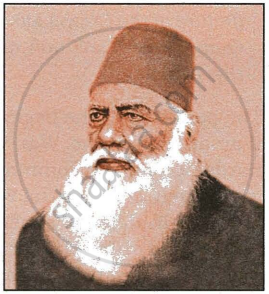
- What were his views regarding Hindu-Muslim unity?
- What role did he play in the formation of the Muslim League?
- State the impact of the Muslim League on the National Movement.
The growth of communalism in India was encouraged by the British authorities as well as certain trends in Indian society. In light of this observation, explain:
- The Divide and Rule Policy of the British.
- The writings and speeches of the Assertive Nationalists.
- The erroneous interpretation of Indian History.
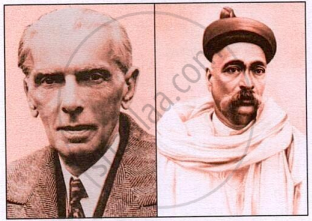
- Identify the persons in the given picture. Which agreement for a joint scheme of political reforms was signed by these two persons? The agreement was signed post which international event?
- Mention any three factors that led to the signing of this agreement.
- State any two significant outcomes of this agreement.
Higher Order Thinking Skills (HOTS)
Realising the aims and objectives of the Muslim League when it was formed in 1906, do you think that more than the Muslim League, it was the British policy of Divide and Rule that encouraged the communal forces to create a rift between the two communities in India?
Mahatma Gandhi said, “Communal harmony could not be permanently established in our country so long as highly distorted versions of history were taught in her schools.” State your views on this statement and justify it by giving examples.
Not many people are aware of the friendship built on mutual respect that was a symbol of Hindu-Muslim unity of India-the friendship between Lokmanya Tilak and Mohammed Ali Jinnah. When Tilak, as the President of Home Rule League, was leaving for England to press for India’s demand for Swaraj, Jinnah had proclaimed that there was no man more fitted to voice the opinions of Indians other than Tilak who had devoted his whole life to the cause of his country. Trace the events that led to Jinnah demanding Partition of the country and the establishment of Pakistan. The relationship between the two countries till date is a proof of the discord sowed by the British. What in your opinion, can be done to improve relations between the two countries?
Solutions for 5: The Muslim League
Morning Star solutions for टोटल हिस्ट्री अँड सिविक्स [इंग्रजी] इयत्ता १० आयसीएसई chapter 5 - The Muslim League
Shaalaa.com has the CISCE Mathematics टोटल हिस्ट्री अँड सिविक्स [इंग्रजी] इयत्ता १० आयसीएसई CISCE solutions in a manner that help students grasp basic concepts better and faster. The detailed, step-by-step solutions will help you understand the concepts better and clarify any confusion. Morning Star solutions for Mathematics टोटल हिस्ट्री अँड सिविक्स [इंग्रजी] इयत्ता १० आयसीएसई CISCE 5 (The Muslim League) include all questions with answers and detailed explanations. This will clear students' doubts about questions and improve their application skills while preparing for board exams.
Further, we at Shaalaa.com provide such solutions so students can prepare for written exams. Morning Star textbook solutions can be a core help for self-study and provide excellent self-help guidance for students.
Concepts covered in टोटल हिस्ट्री अँड सिविक्स [इंग्रजी] इयत्ता १० आयसीएसई chapter 5 The Muslim League are Events Leading to the Formation of the Muslim League, Formation of Muslim League, Aims and Objectives of the Muslim League, Impact of the Muslim League on the National Movement, The Lucknow Pact, Terms of the Lucknow Pact, Significance of the Lucknow Pact, Drawbacks of the Lucknow Pact, Factors Leading to the Formation of the Muslim League, Early Growth of Communalism in India, Events Leading to the Formation of the Muslim League, Formation of Muslim League, Aims and Objectives of the Muslim League, Impact of the Muslim League on the National Movement, The Lucknow Pact, Terms of the Lucknow Pact, Significance of the Lucknow Pact, Drawbacks of the Lucknow Pact, Factors Leading to the Formation of the Muslim League, Early Growth of Communalism in India, Events Leading to the Formation of the Muslim League, Formation of Muslim League, Aims and Objectives of the Muslim League, Impact of the Muslim League on the National Movement, The Lucknow Pact, Terms of the Lucknow Pact, Significance of the Lucknow Pact, Drawbacks of the Lucknow Pact, Factors Leading to the Formation of the Muslim League, Early Growth of Communalism in India.
Using Morning Star टोटल हिस्ट्री अँड सिविक्स [इंग्रजी] इयत्ता १० आयसीएसई solutions The Muslim League exercise by students is an easy way to prepare for the exams, as they involve solutions arranged chapter-wise and also page-wise. The questions involved in Morning Star Solutions are essential questions that can be asked in the final exam. Maximum CISCE टोटल हिस्ट्री अँड सिविक्स [इंग्रजी] इयत्ता १० आयसीएसई students prefer Morning Star Textbook Solutions to score more in exams.
Get the free view of Chapter 5, The Muslim League टोटल हिस्ट्री अँड सिविक्स [इंग्रजी] इयत्ता १० आयसीएसई additional questions for Mathematics टोटल हिस्ट्री अँड सिविक्स [इंग्रजी] इयत्ता १० आयसीएसई CISCE, and you can use Shaalaa.com to keep it handy for your exam preparation.
