Please select a subject first
Advertisements
Advertisements
If m and n, respectively, are the order and the degree of the differential equation `d/(dx) [((dy)/(dx))]^4` = 0, then m + n = ______.
Concept: undefined >> undefined
P is a point on the line joining the points A(0, 5, −2) and B(3, −1, 2). If the x-coordinate of P is 6, then its z-coordinate is ______.
Concept: undefined >> undefined
Advertisements
Define the relation R in the set N × N as follows:
For (a, b), (c, d) ∈ N × N, (a, b) R (c, d) if ad = bc. Prove that R is an equivalence relation in N × N.
Concept: undefined >> undefined
Given a non-empty set X, define the relation R in P(X) as follows:
For A, B ∈ P(X), (4, B) ∈ R iff A ⊂ B. Prove that R is reflexive, transitive and not symmetric.
Concept: undefined >> undefined
Find the general solution of the following differential equation:
`(dy)/(dx) = e^(x-y) + x^2e^-y`
Concept: undefined >> undefined
Find the vector equation of a line passing through a point with position vector `2hati - hatj + hatk` and parallel to the line joining the points `-hati + 4hatj + hatk` and `-hati + 2hatj + 2hatk`.
Concept: undefined >> undefined
Degree of the differential equation `sinx + cos(dy/dx)` = y2 is ______.
Concept: undefined >> undefined
Equation of a line passing through (1, 1, 1) and parallel to z-axis is ______.
Concept: undefined >> undefined
Anti-derivative of `(tanx - 1)/(tanx + 1)` with respect to x is ______.
Concept: undefined >> undefined
The function f(x) = x |x| is ______.
Concept: undefined >> undefined
Find the equations of the diagonals of the parallelogram PQRS whose vertices are P(4, 2, – 6), Q(5, – 3, 1), R(12, 4, 5) and S(11, 9, – 2). Use these equations to find the point of intersection of diagonals.
Concept: undefined >> undefined
Read the following passage:
|
The use of electric vehicles will curb air pollution in the long run. V(t) = `1/5 t^3 - 5/2 t^2 + 25t - 2` where t represents the time and t = 1, 2, 3, ...... corresponds to years 2001, 2002, 2003, ...... respectively. |
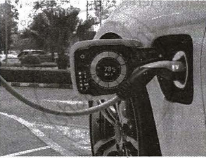
Based on the above information, answer the following questions:
- Can the above function be used to estimate number of vehicles in the year 2000? Justify. (2)
- Prove that the function V(t) is an increasing function. (2)
Concept: undefined >> undefined
Let A = {3, 5}. Then number of reflexive relations on A is ______.
Concept: undefined >> undefined
The interval in which the function f(x) = 2x3 + 9x2 + 12x – 1 is decreasing is ______.
Concept: undefined >> undefined
The sum of the order and the degree of the differential equation `d/dx[(dy/dx)^3]` is ______.
Concept: undefined >> undefined
Read the following passage:
|
An organization conducted bike race under two different categories – Boys and Girls. There were 28 participants in all. Among all of them, finally three from category 1 and two from category 2 were selected for the final race. Ravi forms two sets B and G with these participants for his college project. |

Based on the above information, answer the following questions:
- How many relations are possible from B to G? (1)
- Among all the possible relations from B to G, how many functions can be formed from B to G? (1)
- Let R : B `rightarrow` B be defined by R = {(x, y) : x and y are students of the same sex}. Check if R is an equivalence relation. (2)
OR
A function f : B `rightarrow` G be defined by f = {(b1, g1), (b2, g2), (b3, g1)}. Check if f is bijective. Justify your answer. (2)
Concept: undefined >> undefined
The function f(x) = x3 + 3x is increasing in interval ______.
Concept: undefined >> undefined
The order and the degree of the differential equation `(1 + 3 dy/dx)^2 = 4 (d^3y)/(dx^3)` respectively are ______.
Concept: undefined >> undefined
Find the interval/s in which the function f : R `rightarrow` R defined by f(x) = xex, is increasing.
Concept: undefined >> undefined
Let N be the set of all natural numbers and R be a relation on N × N defined by (a, b) R (c, d) `⇔` ad = bc for all (a, b), (c, d) ∈ N × N. Show that R is an equivalence relation on N × N. Also, find the equivalence class of (2, 6), i.e., [(2, 6)].
Concept: undefined >> undefined
