Advertisements
Advertisements
Polio drops are delivered to 50 K children in a district. The rate at which polio drops are given is directly proportional to the number of children who have not been administered the drops. By the end of 2nd week half the children have been given the polio drops. How many will have been given the drops by the end of 3rd week can be estimated using the solution to the differential equation `"dy"/"dx" = "k"(50 - "y")` where x denotes the number of weeks and y the number of children who have been given the drops.
State the order of the above given differential equation.
Concept: undefined >> undefined
Write the sum of the order and the degree of the following differential equation:
`d/(dx) (dy/dx)` = 5
Concept: undefined >> undefined
Advertisements
Find: `int (x + 1)/((x^2 + 1)x) dx`
Concept: undefined >> undefined
The value of ‘k’ for which the function f(x) = `{{:((1 - cos4x)/(8x^2)",", if x ≠ 0),(k",", if x = 0):}` is continuous at x = 0 is ______.
Concept: undefined >> undefined
If m and n, respectively, are the order and the degree of the differential equation `d/(dx) [((dy)/(dx))]^4` = 0, then m + n = ______.
Concept: undefined >> undefined
P is a point on the line joining the points A(0, 5, −2) and B(3, −1, 2). If the x-coordinate of P is 6, then its z-coordinate is ______.
Concept: undefined >> undefined
Define the relation R in the set N × N as follows:
For (a, b), (c, d) ∈ N × N, (a, b) R (c, d) if ad = bc. Prove that R is an equivalence relation in N × N.
Concept: undefined >> undefined
Given a non-empty set X, define the relation R in P(X) as follows:
For A, B ∈ P(X), (4, B) ∈ R iff A ⊂ B. Prove that R is reflexive, transitive and not symmetric.
Concept: undefined >> undefined
Find the general solution of the following differential equation:
`(dy)/(dx) = e^(x-y) + x^2e^-y`
Concept: undefined >> undefined
Find the vector equation of a line passing through a point with position vector `2hati - hatj + hatk` and parallel to the line joining the points `-hati + 4hatj + hatk` and `-hati + 2hatj + 2hatk`.
Concept: undefined >> undefined
Degree of the differential equation `sinx + cos(dy/dx)` = y2 is ______.
Concept: undefined >> undefined
Equation of a line passing through (1, 1, 1) and parallel to z-axis is ______.
Concept: undefined >> undefined
Anti-derivative of `(tanx - 1)/(tanx + 1)` with respect to x is ______.
Concept: undefined >> undefined
The function f(x) = x |x| is ______.
Concept: undefined >> undefined
Find the equations of the diagonals of the parallelogram PQRS whose vertices are P(4, 2, – 6), Q(5, – 3, 1), R(12, 4, 5) and S(11, 9, – 2). Use these equations to find the point of intersection of diagonals.
Concept: undefined >> undefined
Read the following passage:
|
The use of electric vehicles will curb air pollution in the long run. V(t) = `1/5 t^3 - 5/2 t^2 + 25t - 2` where t represents the time and t = 1, 2, 3, ...... corresponds to years 2001, 2002, 2003, ...... respectively. |
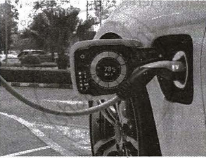
Based on the above information, answer the following questions:
- Can the above function be used to estimate number of vehicles in the year 2000? Justify. (2)
- Prove that the function V(t) is an increasing function. (2)
Concept: undefined >> undefined
Let A = {3, 5}. Then number of reflexive relations on A is ______.
Concept: undefined >> undefined
The interval in which the function f(x) = 2x3 + 9x2 + 12x – 1 is decreasing is ______.
Concept: undefined >> undefined
The sum of the order and the degree of the differential equation `d/dx[(dy/dx)^3]` is ______.
Concept: undefined >> undefined
Read the following passage:
|
An organization conducted bike race under two different categories – Boys and Girls. There were 28 participants in all. Among all of them, finally three from category 1 and two from category 2 were selected for the final race. Ravi forms two sets B and G with these participants for his college project. |

Based on the above information, answer the following questions:
- How many relations are possible from B to G? (1)
- Among all the possible relations from B to G, how many functions can be formed from B to G? (1)
- Let R : B `rightarrow` B be defined by R = {(x, y) : x and y are students of the same sex}. Check if R is an equivalence relation. (2)
OR
A function f : B `rightarrow` G be defined by f = {(b1, g1), (b2, g2), (b3, g1)}. Check if f is bijective. Justify your answer. (2)
Concept: undefined >> undefined
