Advertisements
Advertisements
प्रश्न
Why did it make Mr. Purcell feel “vaguely insulted”?
Advertisements
उत्तर
Mr. Purcell owned the pet shop and considered himself as a professional man. Customers bought birds and animals from him to keep as pets in their houses. He thought that the man had desired the doves desperately as he had spent all his income on it. That is why he sold the doves to him at a reduced price. Mr. Purcell was annoyed with the man because of his behaviour. The man did not show any interest when Mr. Purcell started telling him about the care and feeding of doves. Instead, he walked out of the shop and freed the two doves he had bought, throwing away the cage on the road. This made Mr. Purcell feel “vaguely insulted”.
संबंधित प्रश्न
Answer these question in 30–40 words.
Why did Bismillah Khan refuse to start a shehnai school in the U.S.A.?
Now read the following account
In groups of six, work on one of the mysteries given below by surfing the net and through other sources. Create a power point presentation/a photo essay.
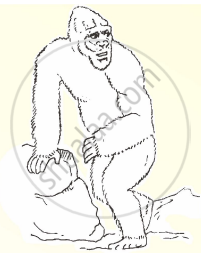
- Yeti, the abominable snowman
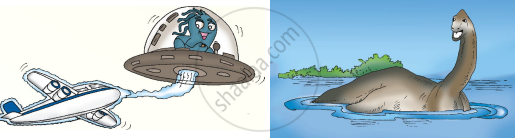
- Loch Ness Monster
- UFOs (Unidentified Flying Objects)
- Lost city of Atlantis
- Crop circles
- Nazca lines
Its a cruel thing to leave her so.”
“Then take her to the poorhouse: she’ll have to go there,” answered the blacksmith’s wife, springing away, and leaving Joe behind.
For a little while the man stood with a puzzled air; then he turned back, and went into the hovel again. Maggie with painful effort, had raised herself to an upright position and was sitting on the bed, straining her eyes upon the door out of which all had just departed, A vague terror had come into her thin white face.
“O, Mr. Thompson!” she cried out, catching her suspended breath, “don’t leave me here all alone!” ,
Though rough in exterior, Joe Thompson, the wheelwright, had a heart, and it was very tender in some places. He liked children, and was pleased to have them come to his shop, where sleds and wagons were made or mended for the village lads without a draft on their hoarded sixpences.
“No, dear,” he answered, in a kind voice, going to the bed, and stooping down over the child, “You she’n’t be left here alone.” Then he wrapped her with the gentleness almost of a woman, in the clean bedclothes which some neighbor had brought; and, lifting her in his strong arms, bore her out into the air and across the field that lay between the hovel and his home.
Read the extract given below and answer the question that follow.
Describe the feelings and plight of Maggie when she was left alone.
She lighted another match, and then she found herself sitting under a beautiful Christmas-tree. It was larger and more beautifully decorated than the one which she had seen through the glass door at the rich merchant’s. Thousands of tapers were burning upon the green branches, and colored pictures, like those she had seen in the show- windows, looked down upon it all. The little one stretched out her hand towards them, and the match went out.
The Christmas lights rose higher and higher, till they looked to her like the stars in the sky. Then she saw a star fall, leaving behind it a bright streak of fire. “Someone is dying,” thought the little girl, for her old grandmother, the only one who had ever loved her, and who was now dead, had told her that when a star falls, a soul was going up to God.
Read the extract given below and answer the question that follow.
How did the Christmas lights appear when the match went out?
Answer the following question.
“But the cop’s mind would not consider Soapy”. What did the cop not consider, and why?
Answer the following question.
“There was a sudden and wonderful change in his soul”. What brought about the change in Soapy?
Answer the following question.
Where did the lady find the bear cub? How did she bring it up?
On which planet do Tilloo and his parents live?
What did Maya think about Mr Nath’s visitor?
How did the author said to encourage his friend to fix the gear-case?
Complete the following sentence
The chatter is electrical because ______
Describe Plan A and its consequences
Describe the tone in which the narrator’s father dismissed his wife’s warnings every single time.
What does mother Warn him?
Discuss the question in pairs before you write the answer.
Who did he choose next?
What was the real aim of Miss Beam’s school?
Complete the following sentences from memory choosing a phrase from those given in brackets.
The first time I took a chance I got ____________
Which is more desirable-friendship or enmity? When does a person hear strongly the voice of his conscience?
The words given against the sentences below can be used both as nouns and verbs. Use them appropriately to fill in the blanks.
(i) He gave a ______________________ in answer to my question. (smile)
(ii) We also _______________________ to see him smile.
