Advertisements
Advertisements
प्रश्न
Which of the following is an example of vic-dihalide?
पर्याय
Dichloromethane
1, 2-dichloroethane
Ethylidene chloride
Allyl chloride
Advertisements
उत्तर
1, 2-dichloroethane
Explanation:
1, 2-Dichloroethane is a vic-dihalide since two Cl atoms are present on vicinal carbon atoms (adjacent).
\[\begin{array}{cc}
\ce{H}\\
\phantom{}|\\
\ce{Cl - C - Cl}\\
\phantom{}|\\
\phantom{}\ce{\underset{(Dichloromethane)}{H}}\phantom{}
\end{array}\]
\[\begin{array}{cc}
\phantom{...}\ce{CH2 - CH2}\\
\phantom{}|\phantom{.......}|\\
\phantom{}\ce{\underset{(1, 2-Dichloroethane)}{\phantom{.}Cl\phantom{.....}Cl}}\phantom{}
\end{array}\]
\[\begin{array}{cc}
\phantom{....}\ce{H}\phantom{...}\ce{Cl}\\
\phantom{...}|\phantom{....}|\\
\phantom{...}\ce{H - C - C - H}\\
\phantom{...}|\phantom{....}|\\
\phantom{..}\ce{\underset{(Ethylidene chloride)}{\phantom{..}H\phantom{...}Cl}}\phantom{}
\end{array}\]
\[\begin{array}{cc}
\ce{Cl}\phantom{...............}\\
|\phantom{................}\\
\ce{\underset{(Allyl chloride)}{CH2 - CH = CH2}}
\end{array}\]
APPEARS IN
संबंधित प्रश्न
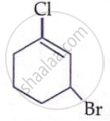
Draw the structure of the major monohalo product in the following reaction:

Name the following halide according to the IUPAC system and classify it as an alkyl, allyl, benzyl (primary, secondary, tertiary), vinyl or aryl halide:
(CH3)2CHCH(Cl)CH3
Name the following halide according to the IUPAC system and classify it as an alkyl, allyl, benzyl (primary, secondary, tertiary), vinyl or aryl halide:
CH3CH = CHC(Br)(CH3)2
Name the following halide according to the IUPAC system and classify it as an alkyl, allyl, benzyl (primary, secondary, tertiary), vinyl or aryl halide:
p-ClC6H4CH2CH(CH3)2
Draw the structure of major monohalo product in each of the following reactions :
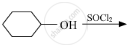
m-Xylene reacts with Br2 in presence of FeBr3, what are products formed:
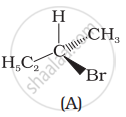
Which of the following structures is enantiomeric with the molecule (A) given below:
The reaction of toluene with chlorine in the presence of iron and in the absence of light yields ______.
Which alkyl halide has maximum density
Classify the following compound as a primary, secondary and tertiary halide.
4-Bromopent-2-ene
Which of the following belongs to the class of vinyl halides?
Name the following halide according to the IUPAC system and classify them as alkyl, allyl, benzyl (primary, secondary, tertiary), vinyl, or aryl halide:
\[\ce{CH3CH2C(CH3)2CH2I}\]
Name the following halide according to IUPAC system and classify them as alkyl, allyl, benzyl (primary, secondary, tertiary), vinyl or aryl halide:
CH3C(Cl)(C2H5)CH2CH3
Write the structure of the following organic halogen compound.
1,4-Dibromobut-2-ene
Name the following halide according to IUPAC system and classify them as alkyl, allyl, benzyl (primary, secondary, tertiary), vinyl or aryl halides:
\[\ce{CH3CH2C(CH3)2CH2I}\]
Name the following halides according to IUPAC system and classify them as alkyl, allyl, benzyl (primary, secondary, tertiary), vinyl or aryl halides:
\[\ce{CH3C(C2H5)2CH2Br}\]
Name the following halide according to IUPAC system and classify as alkyl, allyl, benzyl (primary, secondary, tertiary), vinyl or aryl halides:
\[\ce{CH3C(C2H5)2CH2Br}\]
IUPAC name of \[\begin{array}{cc}
\phantom{}\ce{CH3}\phantom{..........}\ce{Br}\phantom{........}\\
\phantom{}|\phantom{................}|\phantom{.........}\\
\phantom{}\ce{CH3CHCH2CHCHCH2CH3}\phantom{}\\
\phantom{}|\phantom{..}\\
\phantom{..}\ce{CH3}\phantom{}
\end{array}\] is ______.
The IUPAC name of the compound shown below is: