Advertisements
Advertisements
प्रश्न
“Trees are to make no shade in winter.” What does this mean? (Contrast this line with the line immediately before it.)
Advertisements
उत्तर
During summers, the trees provide cool shade. In winters, this shade is not required. So people stand under the open sun to enjoy its warmth.
संबंधित प्रश्न
Explain what the reason for the following is .
Einstein wanting to study in Switzerland rather than in Munich.
Thinking about the Poem
What are the things the wind does in the first stanza?
What havoc has the super cyclone wreaked in the life of the people of Orissa?
Now rewrite the pair of sentences given below as one sentence.
What do you do after you finish the book? Perhaps you just throw it away.
In groups of six, work on one of the mysteries given below by surfing the net and through other sources. Create a power point presentation/a photo essay.
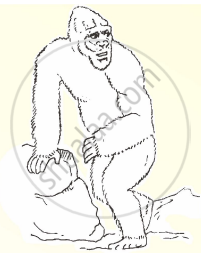
- Yeti, the abominable snowman
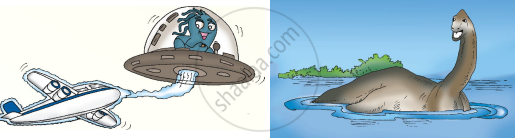
- Loch Ness Monster
- UFOs (Unidentified Flying Objects)
- Lost city of Atlantis
- Crop circles
- Nazca lines
Read the English folktale given below and fill up the blank spaces with suitable words.
There were once three tortoises – a father, a mother (a) ________. a baby (b) ________ one fine morning during Spring, they decided (c) ________ picnic. They picked the place (d) ________ they would go; a nice wood at some distance, (e) ________ they began to put their things together. They got tins of cheese, vegetables, meat and fruit preserves. In about three months, they were ready. They set out carrying their baskets (f) ________ eighteen months, they sat down for a rest. They knew (g) ________ they were already half way to the picnic place.
In three years they reached there. They unpacked (h) ________ spread out the canned food. Then, mother began to search inside the basket. She turned it upside down and shook it (i) ________ something important was missing.
“We’ve forgotten the tin-opener. Baby, you’ll have to go back. We can’t start without a tin-opener. We’ll wait for you”. .
“Do you promise (j) ________ you won’t touch a thing (k) ________ I come back?”
“Yes, we promise faithfully,” Mother and father said together.
Soon after, he was lost among the bushes.
So, they waited and waited. A year went by and they were getting hungry. They had promised (l) ________ they waited. They began to feel really hungry (m) ________ the sixth year was about to end.
Mother tortoise said, “He’d never know the difference.” “No,” said the father tortoise.
Mother tortoise said, “He ought to be back by now. Let’s just have one sandwich (n) ________ we are waiting.”
They picked up the sandwiches, (o) ________ as they were going to eat them, a little voice said, “Aha! I knew you’d cheat! It’s a good thing I didn’t start for that tin opener,” baby Tortoise said.
The black man's face bespoke revenge
As the fire passed from his sight.
For all he saw in his stick of wood
Was a chance to spite the white.
The last man of this forlorn group
Did nought except for gain.
Giving only to those who gave
Was how he played the game.
Their logs held tight in death's still hands
Was proof of human sin.
They didn't die from the cold without
They died from the cold within.
Read the lines given above and answer the question that follow.
Who are ‘they’ referred to here ? Where were they ?
Old Kaspar took it from the boy,
Who stood expectant by;
And then the old man shook his head,
And,with a natural sigh,
"Tis some poor fellow's skull," said he,
"Who fell in the great victory.
"I find them in the garden,
For there's many here about;
And often when I go to plough,
The ploughshare turns them out!
For many thousand men,"said he,
"Were slain in that great victory."
Read the lines given above and answer the question that follow.
Explain with reference to context.
Read the extract given below and answer the questions that follow:
Where the mind is without fear and the head is held high
Where knowledge is free
Where the world has not been broken up into fragments
By narrow domestic walls (Where the Mind is Without Fear: Rabindranath Tagore)
(i) To whom is the poet praying? Whose mind is the poet referring to at the beginning of the poem? Why?
(ii) In which situation is the lead held high? What does he mean by 'knowledge is free'? What are 'narrow domestic walls'?
(iii) What does the poet mean by 'tireless striving'? What does 'clear stream' refer to? Explain.
(iv) What is meant by 'dead habit'? What is 'dead habits' compared to and why?
(v) What does ti» poet wish for al the end ~f the poem? What does tl1e poem tell the readers about the poet? Give a reason to justify yow· answer.
Give an account of the trip to The Victoria am Albert Museum that was planned by Braithwaif, for his class.
Write ‘True’ or ‘False’ against each of the following
(i) Soapy did not want to go to prison. ______
(ii) Soapy had been to prison several times. _____
(iii) It was not possible for Soapy to survive in the city through the winter. _____
(iv) Soapy hated to answer questions of a personal nature. ______
Bristlecone pine trees live the longest. Whom did Mr Wonka asked Charlie to confirm his fact with?
How was the bear punished when he attacked a beehive?
Where did each of them find a home?
Does father lose all his hope of bringing the cat down?
Word in the box given below indicates a large number of… For example, ‘a herd of cows’ refers to many cows. Complete the following phrase with a suitable word from the box.
a _______________of wolves
Read the newspaper report to find the following facts about Columbia’s ill-fated voyage.
Number of days it stayed in space: ____________
What does he carry in his hand?
Why did the daimio reward the farmer, but punish his neighbour for the same act?
Read the following extract from Norah Burke's short story, ‘The Blue Bead' and answer the questions that follow:
|
On the way back, she met her mother, out of breath, come to look for her, and scolding. "I did not see till I was home that you were not there. I thought something must have happened to you." And Sibia, bursting with her story, cried, “Something did!" |
- What are the tasks that Sibia was required to perform from a very young age? [3]
- What had delayed Sibia and separated her from the other village women on her way home that day?
What was Sibia doing when she heard the Gujar woman's cry for help? [3] - What were the dangers that the crocodile had to overcome before it could grow into the ferocious creature that Sibia encountered? [3]
-
How does Sibia’s knowledge of the ways of the jungle help her fight the crocodile? [3]
-
Compare and contrast the mother’s mood with Sibia's in the given extract. Give one reason to explain why each one of them was feeling this way. [4]
