Advertisements
Advertisements
प्रश्न
The individual flattened stacks of membranous structures inside the chloroplasts are known as ______.
पर्याय
grana
stroma
thylakoids
cristae
Advertisements
उत्तर
The individual flattened stacks of membranous structures inside the chloroplasts are known as thylakoids.
Explanation:
Thylakoids are the individual, flattened, disc-like membranous sacs inside a chloroplast that contain chlorophyll molecules to trap light energy. When these individual thylakoid discs stack on top of one another like a pile of coins, the entire column or stack is collectively referred to as a granum (plural: grana). In contrast, stroma is the fluid matrix surrounding these stacks, and cristae are internal folds found inside mitochondria.
APPEARS IN
संबंधित प्रश्न
The diagram given below represents an experiment to prove the importance of a factor in photosynthesis. Answer the questions that follow:
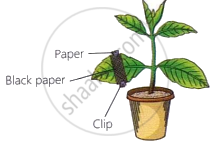
- Name the factor studied in this experiment.
- What will you observe in the experimental leaf after the starch test?
- Explain the process of photosynthesis.
- Give a balanced chemical equation to represent the process of photosynthesis.
- Draw a neat, labelled diagram of an experimental setup to show that oxygen is released during photosynthesis.
Identify the false statements and rewrite them correctly by changing the first or last word only.
Algae are autotrophs.
The site of light reaction in the cells of a leaf is ______.
Are the following statement true or false? Give reason in support of your answer.
The starting point of carbon cycle is the release of carbon dioxide by animals during respiration.
Complete the following food chains by writing the names of appropriate organisms in the blanks:
Grass → ______ → Snake → ______
Name the following:
Source of oxygen given out in photosynthesis.
Choose the correct option.
The net result of photo-oxidation of water is release of ______.
The role of chlorophyll is to absorb light from the sun.
Sunflowers open the petals in bright light during the daytime but close the petals in dark at night. This response of sunflowers is called ______.
