Advertisements
Advertisements
प्रश्न
Rani’s teacher narrates to her students about the production of paper. Read the following narration and fill in the blanks with the verbs using their passive form.
People of China produced paper from wood. They mixed water with the fibres of wood and dried it until they became a soft wet pulp. They used this pulp to make paper. The Chinese invented this method of paper making in 2nd century BCE. Later Egyptians used papyrus plants to make paper.
- Paper ______(produce) from wood.
- The fibres of wood from trees ________(mix) with water to make a soft wet pulp.
- Later, it _____(dry) to make paper.
- This method ________(invent) in 2nd BCE in China.
- Papyrus plants _____(use) by Egyptians to make paper.
Advertisements
उत्तर
- Paper is produced from wood.
- The fibres of wood from trees are mixed with water to make a soft wet pulp.
- Later, it is dried to make paper.
- This method in was invented 2nd BCE in China.
- Papyrus plants were used by Egyptians to make paper.
APPEARS IN
संबंधित प्रश्न
Say whether the verb in the sentence below is transitive or intransitive. Ask yourself a ‘what’ question about the verb. (For some verbs, an object is a person, so ask the question ‘who’ instead of ‘what’).
You found him.
Complete the following table.
| No. | Figure of Speech | Line of the poem | Explanation |
| 1. | ________________ | ________________ | The sky is imagined to art like a human being. |
| 2. | ________________ | with gleaming gold | ________________ |
| 3. | Oxymoron | ________________ | ________________ |
| 4. | ________________ | The country wears a perfect smile. Anaesthesia, Amnesia, Hypnosis | ________________ |
| 5. | Paradox | ________________ | ________________ |
Look up the following verbs in a good dictionary. List at least 20 different uses of the following. You may include their use with different prepositions, adverbs, and idioms.
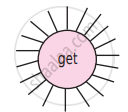
Complete the following.
Example: patient - patience.
attend - ______
Global warming is ______________ the green house emission.
Fill in the blank by adding the appropriate prefix/suffix to the word given in bracket.
The ___________ of the President has been expected for the last half an hour. (arrive)
Give the correct verb form for following sentence.
I go to school.
Add suitable question tag to the following sentence and punctuate properly.
Leaves wither during autumn.
Fill in the blank with the correct infinitive.
The boys went to the forest ______birds.
Read the example and fill in the blank in the same pattern.
Example: sweet - sweeter - sweetest
high - ______ - highest
