Advertisements
Advertisements
प्रश्न
Porifera : Asymmetrical : : Cnidaria : __________
Advertisements
उत्तर
Porifera : Asymmetrical : : Cnidaria : Radially symmetrical
APPEARS IN
संबंधित प्रश्न
Identify me.
I am diploblastic and acoelomate. Which phylum do I belong to?
Give scientific reasons.
Our body irritates if it comes in contact with jelly fish.
Sketch, label and classify a butterfly.
Label the following.
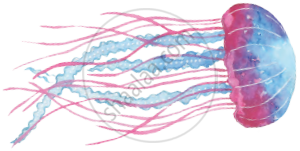
The body of the animal in which phylum is radially symmetrical and diploblastic?
Give scientific reason.
Our body irritates if it comes in contact with a jellyfish.
To which phylum we belong to, if we are marine/aquatic animals?
Draw a neat and labelled diagram.
Hydra
Mesoglea is present in ______.
Match the following.
| PHYLUM | EXAMPLES | ||
| (A) | Coelenterata | (i) | Snail |
| (B) | Platyhelminthes | (ii) | Starfish |
| (C) | Echinodermata | (iii) | Tapeworm |
| (D) | Mollusca | (iv) | Hydra |
What is nematocyst?
Why coelenterates are called diploblastic animals?
Real organs are absent in
Define the terms and give one example
Coelom
How is the body wall of coelenterates arranged?
Alternation of generations in Coelenterata is known as
What is metagenesis? Mention an example which exhibits this phenomenon.
Name
An animal with cnidoblasts
Give an example for the following:
Animal, which exhibits alternation of generation
