Advertisements
Advertisements
प्रश्न
Porifera : Asymmetrical : : Cnidaria : __________
Advertisements
उत्तर
Porifera : Asymmetrical : : Cnidaria : Radially symmetrical
APPEARS IN
संबंधित प्रश्न
Label the following.
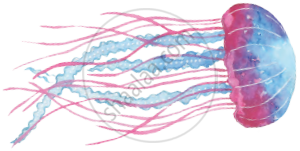
Tentacles are used for capturing the prey.
How does the animal in the figure protect itself?

Give scientific reason.
Our body irritates if it comes in contact with a jellyfish.
To which phylum does it belong, if I have a sting to prick?
To which phylum we belong to, if we are marine/aquatic animals?
What is the use of cnidoblast for us?
Match the following.
| PHYLUM | EXAMPLES | ||
| (A) | Coelenterata | (i) | Snail |
| (B) | Platyhelminthes | (ii) | Starfish |
| (C) | Echinodermata | (iii) | Tapeworm |
| (D) | Mollusca | (iv) | Hydra |
Define the terms and give one example
Coelom
______ are diploblastic.
Name the following:
A phylum with diploblastic animals.
What is polymorphism?
Provide appropriate technical term in the space provided.
Free-floating form of cnidaria ______.
Provide appropriate technical term in the space provided.
Stinging organ of jelly fishes ______.
Differentiate between polyp and medusa
Name
An animal with cnidoblasts
Give an example for the following:
Animal, which exhibits alternation of generation
